What to Do After a Breakdown: Repair vs Tow vs Temporary Fix
Compare roadside repair, towing, and temporary fixes after a truck breakdown. Learn which option minimizes downtime and prevents further damage.

A truck breakdown often creates pressure to get moving again as quickly as possible. However, the fastest option is not always the safest or least expensive choice. The decision between on-site repair, towing, or a temporary fix depends on the type of failure, the risk of additional damage, roadside safety conditions, and how quickly a permanent repair can be completed. FleetGo Heavy Duty helps Edmonton fleets and owner-operators evaluate breakdown situations so downtime can be minimized without creating larger repair costs.
First Decision: Is The Truck Safe To Stay On The Roadside?
The first decision after a breakdown is determining whether the truck can safely remain where it is long enough for assessment or repair. Traffic conditions, visibility, weather, road shoulder width, and vehicle position all affect whether roadside troubleshooting remains practical.
A truck that has lost steering, braking capability, or safe positioning may require immediate towing regardless of the underlying mechanical failure. Similarly, trucks stopped in active traffic lanes, narrow shoulders, construction zones, or poor visibility conditions often create safety risks that outweigh the benefits of attempting roadside repairs.
Mechanical diagnosis becomes secondary if roadside conditions create immediate danger. In these situations, moving the truck to a safer location or arranging towing may be the most appropriate first step.
Option 1: On-Site Repair With Mobile Truck Service
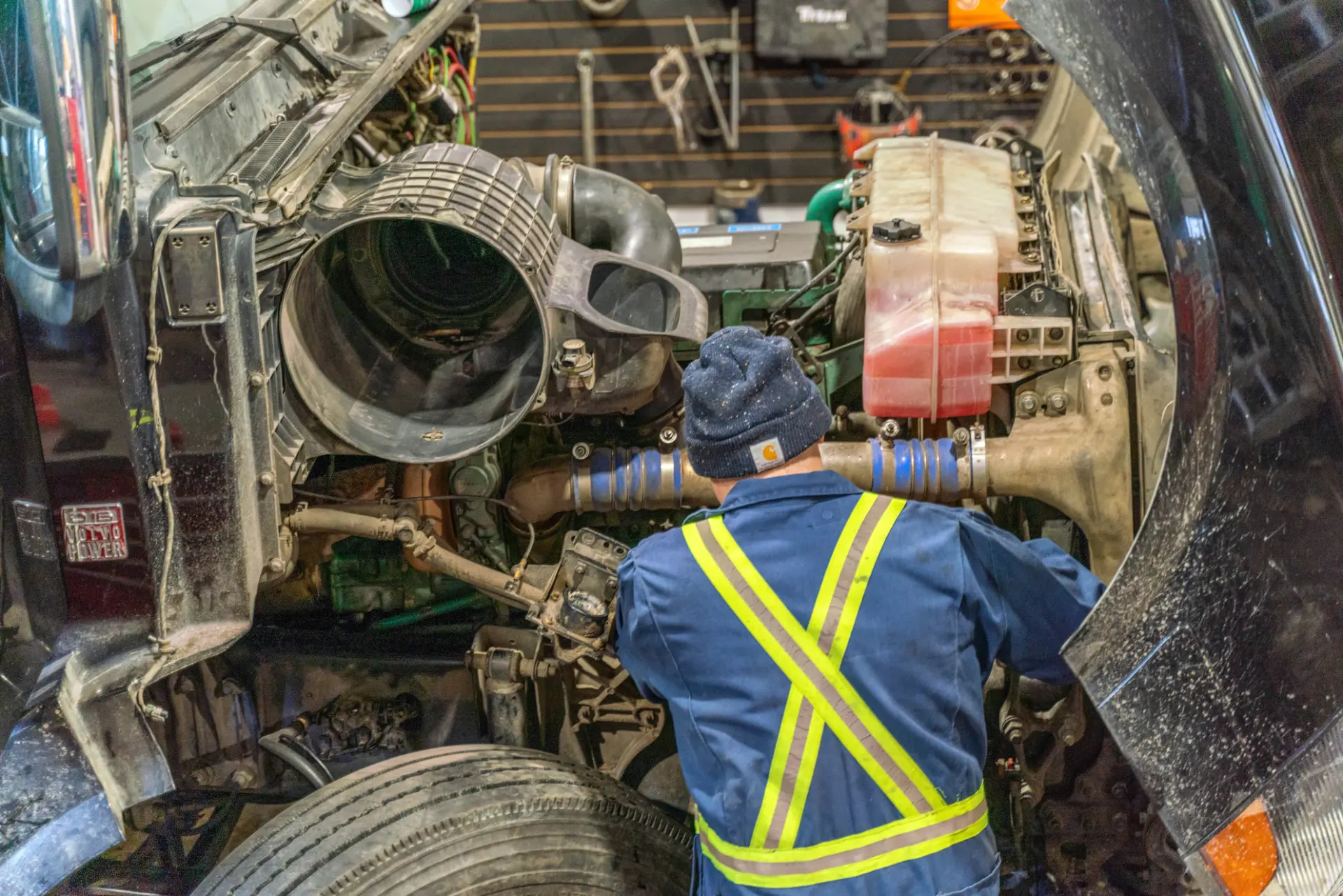
Mobile truck repair can often restore operation without the delays associated with towing and shop scheduling. When the failure can be diagnosed and repaired safely on-site, roadside service frequently provides the fastest path back into operation.
When Mobile Repair Is The Fastest Option
Mobile repair works best when the failed component is accessible, replacement parts are available, and the repair does not require extensive disassembly or specialized shop equipment. Electrical faults, battery issues, air system leaks, charging system failures, starter problems, lighting faults, sensor issues, and some fuel delivery problems are often good candidates for roadside repair.
On-site repair can significantly reduce downtime because the truck remains at its current location and avoids transportation delays. This is particularly valuable when the vehicle is carrying time-sensitive loads or operating in areas where towing availability is limited.
The decision becomes more favorable when the technician can accurately diagnose the failure and complete the repair without creating additional risks.
Limitations Of Roadside Repairs
Not every breakdown can be repaired safely outside a shop environment. Internal engine damage, transmission failures, major cooling system issues, extensive wiring damage, and structural component failures often require equipment, lifting capability, or diagnostic procedures that are not practical roadside.
Roadside conditions can also limit repair options. Weather exposure, traffic hazards, poor lighting, and restricted workspace may prevent repairs that would otherwise be straightforward in a controlled shop environment.
Even when a temporary roadside repair is technically possible, it may not provide the reliability needed for continued operation over longer distances.
Option 2: Towing To A Repair Shop
Towing becomes the preferred option when continued operation creates a high risk of additional damage or when repairs exceed what can reasonably be completed on-site.
Situations Where Towing Prevents Bigger Damage
Engine overheating, severe oil pressure loss, transmission failures, drivetrain damage, brake system failures, and major coolant leaks often justify towing because continued operation can significantly increase repair costs.
Some breakdowns initially appear minor but can create major secondary damage if the vehicle continues moving. For example, driving with lubrication failures, cooling system failures, or serious charging system faults may transform a repairable problem into a complete component replacement.
Towing may also be the safer choice when the root cause remains uncertain. Preventing additional damage often costs less than attempting to reach a destination while an unresolved mechanical failure continues developing.
Cost And Downtime Tradeoffs Of Towing
Towing introduces additional expense and transportation delays, but those costs must be weighed against the risk of escalating damage. In many situations, towing increases short-term downtime while reducing total repair costs and overall vehicle downtime.
Repair facilities also provide access to specialized diagnostic equipment, lifting systems, inventory availability, and controlled working conditions that can improve repair accuracy and efficiency.
The most expensive decision is often not towing itself but delaying towing after it has already become the appropriate option.
Option 3: Temporary Fix To Reach A Shop
Some breakdown situations fall between immediate repair and immediate towing. In these cases, a temporary fix may allow the truck to reach a repair facility safely for permanent repairs.
When A Short-Term Fix Makes Sense
Temporary fixes are most appropriate when the underlying failure is understood, the repair risk is controlled, and the vehicle can be operated safely for a limited distance. Minor air leaks, certain electrical connection issues, loose components, or non-critical system faults may sometimes be managed temporarily until permanent repairs are available.
The objective is not restoring full reliability. The objective is reaching a repair facility without creating additional damage or safety concerns.
Temporary measures should only be considered when the failure does not affect critical systems such as steering, braking, lubrication, structural integrity, or severe overheating conditions.
Risks Of Continuing To Drive With Known Issues
Continuing to operate a truck with a known fault always introduces some level of risk. Small failures can worsen quickly when components remain under load, exposed to vibration, or subjected to operating temperatures.
A temporary fix may solve the immediate symptom without correcting the underlying cause. As a result, operators must avoid assuming that normal operation has been fully restored simply because the truck is moving again.
Misjudging the severity of the failure can transform a relatively small repair into a significantly larger breakdown event.
Common Mistakes That Turn Minor Breakdowns Into Major Repairs
One common mistake is continuing to operate the truck after warning signs indicate escalating mechanical damage. Ignoring overheating conditions, oil pressure warnings, air system faults, or unusual driveline noises often increases repair severity significantly.
Another mistake is relying on temporary fixes longer than intended. Measures designed to reach a repair facility can become risky when operators attempt to complete full routes or extended trips before permanent repairs occur.
Delayed diagnostics can also increase costs. Some failures begin as relatively minor issues but affect additional systems when left unresolved. Addressing the root cause early often reduces both repair expense and downtime.
Finally, assuming that the truck is safe because it still moves under its own power can lead to poor decisions. Many serious failures allow limited operation before causing more substantial mechanical damage.
Emergency Truck Repair And Roadside Support With FleetGo Heavy Duty In Edmonton
FleetGo Heavy Duty provides emergency truck repair, roadside diagnostics, mobile service, and breakdown support throughout Edmonton and surrounding areas. Whether the situation requires on-site repair, temporary troubleshooting, or towing coordination, the goal is identifying the safest and most efficient path back to operation.
By evaluating failure severity, roadside conditions, repair feasibility, and the risk of secondary damage, FleetGo Heavy Duty helps operators choose the option that minimizes downtime while protecting the truck from unnecessary repair costs.
More Articles


Alternator vs Starter Failures in Commercial Trucks
Contact FleetGo
Get in touch with Fleetgo today to request a quote or to schedule in-shop or mobile services in Edmonton & the surrounding area! Our mobile service extends to a 250km radius around Edmonton for emergency roadside assistance & mobile truck & fleet repairs, including Sherwood Park, Spruce Grove, Fort Saskatchewan, St. Albert, Stony Plain, along Highway 16, & more!