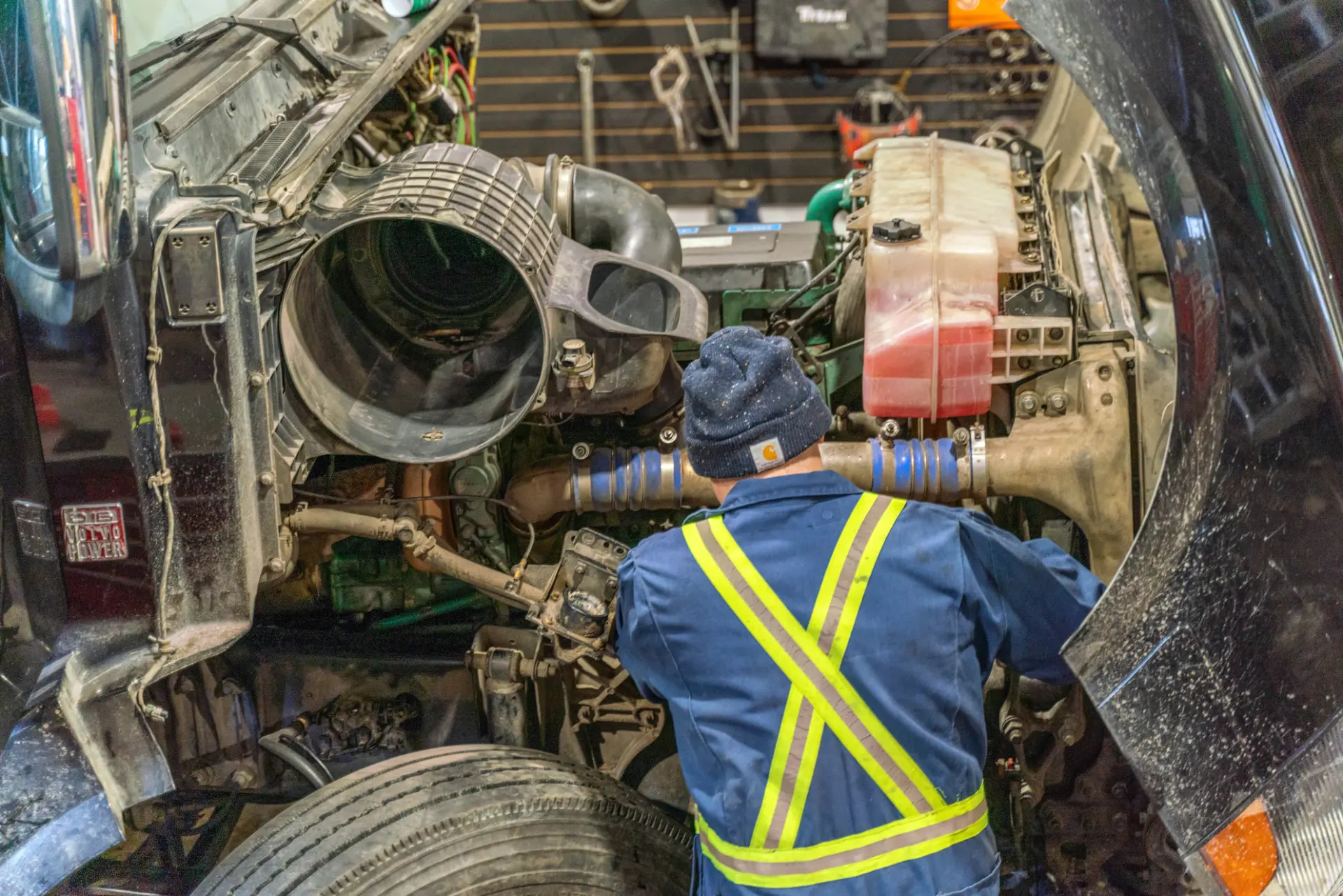
Intermittent Faults in Heavy Trucks: Why They're Hard to Fix
Understand why intermittent heavy truck faults are difficult to diagnose, how they cause repeat breakdowns, and when advanced diagnostics are necessary.

Intermittent faults in heavy trucks are often more difficult to diagnose than constant failures because the problem may disappear before technicians can observe or test it directly. Unlike permanent faults, intermittent issues can occur only under specific operating conditions, making them difficult to reproduce, diagnose, and repair accurately. FleetGo Heavy Duty helps fleet operators identify when recurring faults require deeper diagnostic investigation rather than repeated repairs.
What Makes Intermittent Truck Faults Different From Constant Failures
Intermittent faults differ from permanent failures because the affected system may continue operating normally for extended periods before the problem reappears. This inconsistency creates uncertainty during diagnosis and increases the likelihood of incomplete repairs.
Temporary vs Persistent System Failures
Persistent failures typically produce repeatable symptoms that can be verified through testing. Intermittent faults, by contrast, recur unpredictably and may disappear entirely between events. Temporary faults may occur only once or under a very specific condition and never return.
A truck experiencing an intermittent issue may operate without problems for hours, days, or even weeks between failures. This can create the impression that the problem has been resolved when the underlying defect remains present.
Temporary faults often result from unstable electrical connections, component degradation, environmental conditions, software irregularities, or mechanical conditions that only occur under specific operating circumstances. Many intermittent faults become progressively more frequent over time and eventually present as persistent failures.
Why Fault Codes May Not Always Appear
Diagnostic fault codes are only generated when specific operating conditions and fault validation thresholds are met. Many ECUs require a fault to occur for a certain duration, frequency, or operating condition before storing a diagnostic code.
If a fault occurs briefly or resolves before these validation requirements are satisfied, no diagnostic code may be recorded. Even when fault codes are stored, they may identify the affected system rather than the underlying cause of the failure. A communication fault, voltage irregularity, or sensor error may be the result of another issue rather than the source of the problem itself.
The absence of fault codes does not necessarily indicate the absence of a defect. Many intermittent failures require analysis beyond standard code retrieval procedures.
Environmental and Load-Dependent Triggers
Some intermittent faults only occur under specific environmental or operating conditions. Temperature changes, vibration, road conditions, moisture exposure, engine load, vehicle speed, trailer configuration, and operating duration can all influence whether a fault occurs.
For example, cold temperatures may affect electrical connections, heat may influence sensor performance, vibration under heavy loads may expose wiring faults, and moisture intrusion may create temporary electrical failures. This variability creates diagnostic challenges because the conditions that trigger the failure may not exist when the truck arrives for service.
Understanding when the fault occurs can often provide more diagnostic value than understanding the fault code itself. Driver observations regarding operating conditions, load status, temperature, road conditions, and timing frequently become critical components of the diagnostic process.
Common Systems Affected by Intermittent Issues
Intermittent failures can occur throughout the vehicle, but certain systems are more susceptible due to their operating environment, complexity, and dependence on electronic communication.
Electrical and Wiring Problems
Electrical systems are among the most common sources of intermittent failures. Wiring harness movement, connector corrosion, loose terminals, damaged insulation, grounding issues, and vibration-related wear can all produce faults that appear and disappear unpredictably.
Common failure points often include harness flex locations, electrical connectors, grounding points, chassis interfaces, and trailer electrical connections that experience repeated movement or environmental exposure.
These issues are particularly difficult to diagnose because electrical continuity may appear normal during testing while failing under load, vibration, temperature changes, or operating conditions.
As trucks accumulate mileage and operating hours, electrical intermittency often becomes more common due to environmental exposure and component aging.
Sensor and ECU Communication Failures
Modern heavy trucks rely on continuous communication between sensors, electronic control units, and network systems. Brief interruptions in these communication pathways can create symptoms that appear unrelated to the actual cause.
Sensor degradation, software irregularities, voltage fluctuations, communication network interruptions, and intermittent controller failures can trigger warning lights, performance limitations, or shutdown conditions that disappear before diagnostic testing begins.
Because multiple systems often share communication networks, a single intermittent communication fault can create symptoms across multiple modules and vehicle systems simultaneously, making the original source difficult to identify.
Air, Fuel, and Emissions System Irregularities
Intermittent faults affecting air, fuel, and emissions systems frequently create inconsistent performance concerns that are difficult to reproduce. Variable sensor readings, temporary pressure losses, intermittent leaks, sticking components, regeneration irregularities, intermittent DEF dosing issues, pressure sensor faults, aftertreatment communication problems, and fluctuating operating conditions can produce symptoms that appear unrelated or inconsistent. These systems often present diagnostic challenges because the fault may only occur under specific temperatures, loads, or operating cycles.
Why Intermittent Problems Often Go Misdiagnosed
Intermittent faults frequently remain unresolved because traditional repair strategies depend on observing repeatable failures.
Replacing Parts Without Confirming Root Cause
One of the most common causes of repeated repairs is replacing components based on symptoms rather than confirming the source of the failure. Root cause diagnosis focuses on identifying the underlying failure mechanism rather than simply replacing the component that reports the fault.
For example, a sensor fault code may result from a wiring defect, voltage problem, communication interruption, or controller issue rather than a failed sensor itself. Replacing parts without identifying the underlying cause can temporarily change symptoms without resolving the original problem. Repeated part replacement without confirmation often increases both repair costs and downtime.
Inconsistent Reproduction of the Issue
Many diagnostic procedures depend on reproducing the fault during testing. Intermittent failures often resist this approach because the conditions required to trigger the problem may not occur in the shop environment.
A vehicle may operate normally during inspection despite experiencing repeated failures during actual service conditions. This can result in incomplete repairs, misdiagnosis, or assumptions that the problem no longer exists.
When faults cannot be reproduced directly, technicians may need to rely on extended monitoring, operational testing, historical trend analysis, or data logging to identify the underlying problem. The inability to reproduce a fault should not automatically eliminate the possibility of a significant underlying defect.
Limited Data From Standard Diagnostic Scans
Standard diagnostic scans typically capture current operating conditions and stored fault histories. Intermittent failures often occur outside the time period captured by routine diagnostic procedures.
Some intermittent faults require extended monitoring, operational data analysis, circuit testing under load, oscilloscope testing, data recording, or evaluation of historical fault patterns to identify the root cause accurately.
The absence of diagnostic evidence during a routine inspection does not necessarily mean that a fault cannot be identified through more advanced diagnostic methods.
How Intermittent Faults Turn Into Repeated Breakdowns
Intermittent problems rarely remain static. Over time, unresolved faults often become more frequent, more severe, and more expensive to repair.
Escalation From Minor Signal Errors to Major Failures
Many serious failures begin as minor irregularities. A temporary voltage fluctuation, intermittent communication fault, unstable sensor signal, or minor air leak may initially create only occasional symptoms.
As components continue to degrade, intermittent faults can create repeated system stress, improper operating conditions, protective derates, or secondary failures that eventually lead to major component damage.
What initially appears to be an occasional nuisance may eventually result in derates, shutdown conditions, component failure, or roadside breakdowns. Early diagnostic intervention can sometimes prevent major failures that develop gradually over time.
Downtime Patterns Caused by Unresolved Issues
Recurring intermittent faults often create a pattern of repeated service visits, unexpected breakdowns, emergency repairs, and operational disruptions.
These patterns can become more expensive than major repairs because they create unpredictable downtime, disrupt scheduling, reduce equipment availability, and increase diagnostic labour costs over multiple repair attempts.
When the same fault returns repeatedly despite repairs, the problem often requires a different diagnostic strategy rather than additional component replacement. Repeated failures affecting the same symptom, operating condition, or vehicle system frequently indicate the need for advanced diagnostic investigation.
When to Escalate to Advanced Diagnostics
Fleet operators should consider advanced diagnostic investigation when faults repeatedly return, symptoms remain inconsistent, multiple systems appear affected simultaneously, or repairs continue without identifying a verified root cause.
Advanced diagnostics involve testing methods beyond standard code retrieval and routine inspections. These methods may include extended monitoring, operational testing, data recording, circuit loading analysis, oscilloscope testing, historical trend evaluation, and system interaction analysis.
There is no fixed number of repeat failures that automatically requires escalation. However, when multiple repair attempts fail to permanently resolve the same operational issue, the likelihood of a deeper diagnostic problem increases substantially.
Advanced diagnostics may also become economically justified when cumulative repair costs, repeated downtime events, lost productivity, and operational disruption exceed the cost of additional investigation.
The objective of advanced diagnostics is not simply to identify a failed component, but to determine why the failure occurs and prevent repeated breakdown cycles.
FleetGo Heavy Duty's Approach to Complex Fault Detection
FleetGo Heavy Duty approaches intermittent faults by evaluating operational history, fault patterns, environmental conditions, system interactions, and previous repair attempts rather than relying exclusively on active fault codes.
Historical fault patterns, recurring operating conditions, failure timing, and symptom sequences often reveal relationships that isolated diagnostic events cannot identify.
This approach recognizes that intermittent failures often involve multiple contributing factors and may not be detectable through routine diagnostic procedures alone.
System-level analysis involves evaluating the interaction between electrical systems, communication networks, mechanical components, operating conditions, and historical performance patterns rather than assessing individual components in isolation.
By combining diagnostic data, operational context, historical patterns, and system-level analysis, FleetGo Heavy Duty helps fleet operators identify complex faults before repeated breakdowns create additional downtime and repair costs.
More Articles
What Makes a Heavy Truck Repair Shop Reliable for Fleets
Signs Your DPF Needs Cleaning vs Replacement

Which Heavy Truck Repairs Deliver the Highest ROI for Fleet Uptime
Contact FleetGo
Get in touch with Fleetgo today to request a quote or to schedule in-shop or mobile services in Edmonton & the surrounding area! Our mobile service extends to a 100km radius around Edmonton for emergency roadside assistance & mobile truck & fleet repairs, including Sherwood Park, Spruce Grove, Fort Saskatchewan, St. Albert, Stony Plain, along Highway 16, & more!