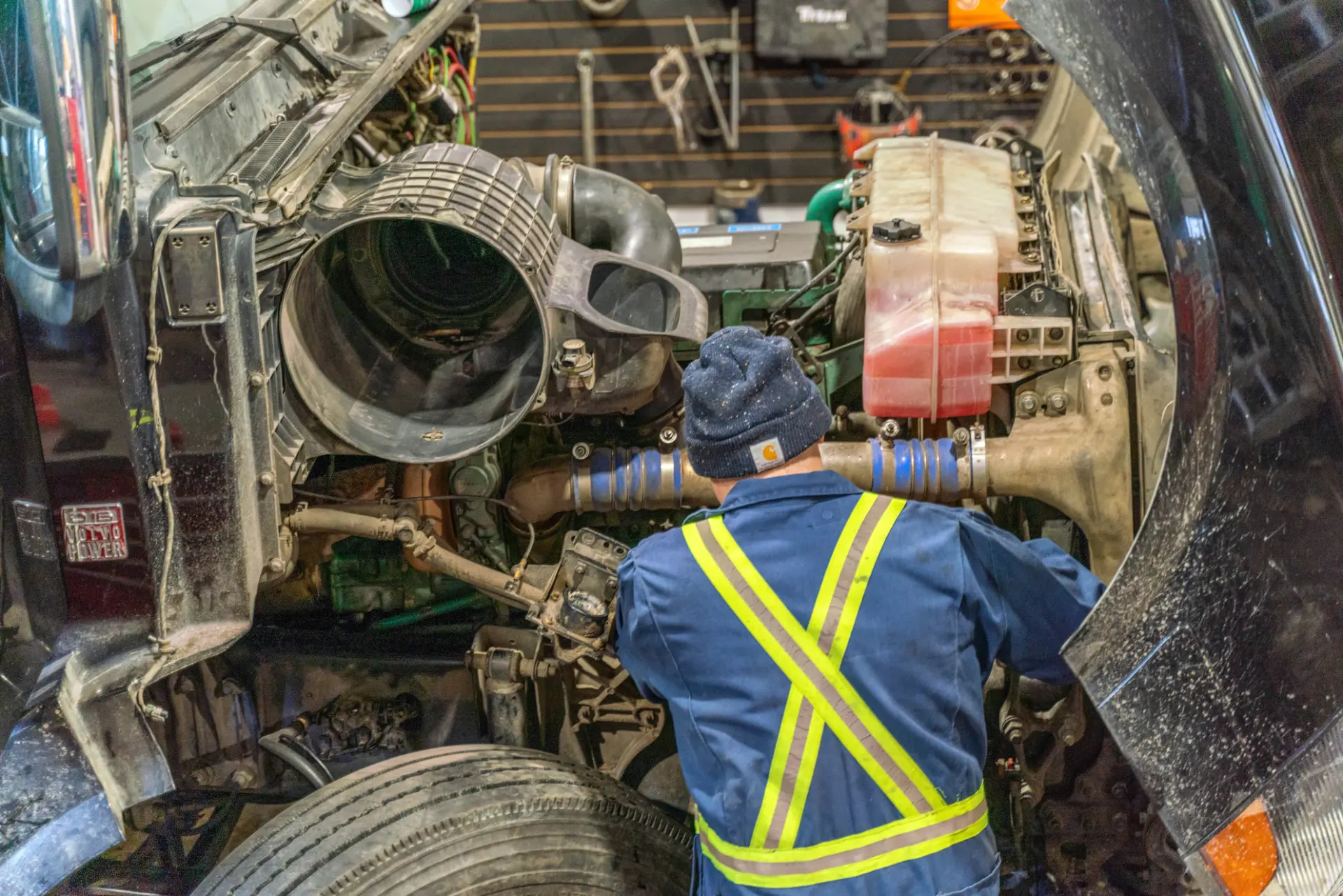
Operating Heavy Trucks in Extreme Cold vs Extreme Heat: What Changes
How extreme cold and heat affect heavy truck performance, failure risks, and maintenance decisions to prevent breakdowns.

Operating heavy trucks in extreme cold vs extreme heat changes how engines, fluids, tires, batteries, air systems, and brakes behave under load. In this context, extreme cold typically refers to sustained temperatures below approximately -20°C, where fluid flow, battery output, and air system moisture become critical constraints. Extreme heat typically refers to sustained temperatures above 30°C, where cooling systems, tire pressure, and fluid stability are pushed toward their limits. Cold increases starting, moisture, and brittleness risks, while heat increases cooling, tire, and fluid breakdown risks. FleetGo Heavy Duty helps operators understand these seasonal differences so maintenance and repair decisions match the conditions trucks actually face across highway tractors, vocational trucks, and mixed-duty fleets.
Key System Differences Between Cold and Heat Conditions
Cold and heat do not stress trucks in the same way. Extreme cold usually creates resistance, restriction, and moisture-freezing problems driven by increased fluid viscosity and reduced energy output. Extreme heat usually creates expansion, pressure, thinning fluids, and thermal overload as systems accumulate heat faster than it can be dissipated.
The biggest difference is timing. Cold-related issues often appear during start-up, warm-up, or early operation because systems cannot reach stable operating conditions quickly. Heat-related issues often appear after the truck has been working under load, sitting in traffic, climbing grades, or operating for long hours, when internal temperatures exceed design margins. Cold-related failures can occur immediately if systems cannot start or pressurize. Heat-related failures are more often progressive, developing as temperature and load accumulate over time.
Engine Performance and Fluid Behavior
In extreme cold, engine oil, transmission fluid, grease, and diesel fuel become thicker. This makes cold starts harder, slows lubrication, and increases strain on starters, batteries, pumps, and moving components. Using incorrect viscosity grades for the temperature range increases this risk significantly because fluid may not circulate quickly enough to protect internal parts.
In extreme heat, fluids move more easily but lose protection faster. Oil can thin under load, coolant has less margin before overheating, and hydraulic or transmission fluids can break down sooner if the system already has contamination, low levels, or restricted cooling. Operation becomes unsafe when oil pressure drops below operating range or when fluid temperatures exceed system limits and do not stabilize after load reduction.
The maintenance priority changes by season. In cold, the concern is whether fluids can flow and protect components quickly enough during start-up. In heat, the concern is whether fluids can maintain protection after sustained operation under load.
Electrical Systems and Battery Reliability
Cold reduces battery output and increases the power needed to crank the engine. A battery that seems acceptable in mild weather can fail when temperatures drop, especially if cables, terminals, or the charging system are weak.
Heat creates a different battery risk. High temperatures accelerate internal battery wear and can shorten service life, even if the failure does not show up until the next cold snap. Charging systems may also operate under higher load in heat due to cooling demands and accessory use, which can expose alternator or wiring weaknesses.
A weak battery typically shows slow cranking or voltage drop during start-up. A system-wide electrical issue may show charging inconsistencies, repeated warning indicators, or failures during operation, not just at start-up.
Air Systems and Moisture Impact
Air systems face higher moisture-related risk in freezing conditions. Air dryers remove moisture from compressed air before it enters tanks and lines, but their effectiveness depends on maintenance and operating conditions. If moisture is not properly removed, it can accumulate in tanks and lines, then freeze and restrict air movement, which can affect brake release, air pressure recovery, and system reliability.
In heat, moisture is still a maintenance concern, but it is less likely to freeze and block the system. The bigger heat-related concern is worn seals, aging rubber, and components already weakened by pressure, contamination, or heavy use.
Moisture accumulation is influenced by both environmental humidity and maintenance gaps such as infrequent draining or failing air dryers. Cold requires closer attention to moisture control, while heat requires closer attention to wear, leaks, and pressure stability.
Failure Risks Unique to Extreme Cold
Extreme cold increases the risk of failures that come from restriction, freezing, poor flow, and material stiffness. These issues can take a truck out of service immediately if critical systems cannot start, pressurize, or supply fuel. In other cases, they can progress rapidly if early warning signs are ignored.
Cold-weather failures are often preventable when the warning signs are caught early. Hard starting, slow air pressure recovery, fuel restriction, unusual brake behavior, or stiff components should not be treated as normal winter inconvenience.
Fuel Gelling and Cold Start Failures
Diesel fuel can begin to gel at temperatures commonly below approximately -10°C to -15°C depending on fuel type and treatment. Wax crystals form and restrict flow through filters and lines. Once fuel flow drops, the engine may lose power, stall, or fail to start.
Cold start failures can also come from weak batteries, thick oil, poor glow plug or intake heater performance, and starter strain. These systems often fail together because cold increases demand while reducing available power.
Fuel additives and winter-grade diesel reduce gelling risk, but they do not eliminate it if temperatures drop far enough or if fuel is not properly treated.
A truck should not be repeatedly cranked in extreme cold without identifying the cause. Repeated attempts can drain batteries, overheat starters, and turn a serviceable issue into a repair.
Frozen Air Lines and Brake Issues
Frozen air lines can reduce air flow through the braking system, delay pressure recovery, and affect brake release timing. This can reduce braking responsiveness and create unsafe operating conditions.
Partial freezing may still allow limited operation, but it reduces system reliability and can worsen quickly as moisture continues to freeze. Full restriction or inconsistent pressure behavior should be treated as unsafe for continued operation.
The issue is not only outdoor temperature. Moisture inside the system, poor air dryer performance, missed tank draining, or contaminated components can make freezing more likely.
Any brake irregularity in freezing weather should be inspected before the truck continues operating. FleetGo Heavy Duty treats air system and brake concerns as safety-critical because minor restriction can become a serious operating risk.
Increased Component Brittleness
Cold makes rubber, plastic, seals, hoses, wiring insulation, and some metal components less flexible. Parts that bend, flex, vibrate, or seal under pressure are more likely to crack or leak when temperatures are low.
Components most commonly affected include hoses, belts, air lines, seals, and electrical connectors. Brittleness can lead to sudden failure under stress or gradual cracking that becomes visible during operation.
The risk increases when older components are already worn. Extreme cold often exposes parts that were near failure but still functioning in moderate conditions.
Failure Risks Unique to Extreme Heat
Extreme heat increases the risk of failures caused by thermal load, pressure changes, fluid breakdown, and reduced cooling margin. These problems often develop progressively as heat builds during sustained operation rather than immediately at start-up.
Heat-related failures are especially common when a system is already dirty, low on fluid, restricted, overloaded, or overdue for service. Additional factors such as heavy loads, long climbs, high ambient temperature, and reduced airflow amplify this risk.
Overheating and Cooling System Strain
High ambient temperature reduces the cooling system’s ability to remove heat from the engine. Long climbs, stop-and-go traffic, heavy hauling, idling, and restricted airflow can push the system beyond its margin.
Normal operating temperature may fluctuate under load, but a sustained rise beyond normal range, especially without stabilizing after load reduction, indicates overheating risk. Temporary spikes can occur under heavy load, but persistent elevation signals a system issue.
Common contributing issues include low coolant, weak caps, plugged radiators, failing fans, worn belts, coolant contamination, and leaks that only appear under pressure.
A rising temperature gauge should not be ignored because overheating can damage engines quickly. If temperature does not stabilize after reducing load, the truck should be stopped and inspected.
Tire Pressure Expansion and Blowout Risk
Tire pressure rises as heat builds from ambient temperature, road temperature, speed, and load. A typical increase of several PSI is expected during operation, but excessive increase combined with underinflation, overloading, or casing damage increases blowout risk.
Underinflated tires are especially dangerous because they flex more, build more heat, and become more likely to fail.
Tire type, load rating, and condition affect how much expansion can be tolerated. Operators should rely on manufacturer cold inflation specifications and ensure tires are matched to load and operating conditions.
Operators should not bleed hot tires to reduce pressure unless directed by proper tire service procedures.
Accelerated Fluid Breakdown
Extreme heat accelerates breakdown in engine oil, coolant, transmission fluid, hydraulic fluid, grease, and differential oil. Once fluids degrade, they lose their ability to lubricate, cool, seal, or protect components.
Operators can identify degraded fluid through signs such as discoloration, burnt smell, reduced performance, or abnormal temperature behavior. Fluid breakdown is not reversible and requires replacement, along with identifying the cause of overheating or contamination.
Heat also makes existing fluid problems more serious. Low levels, contamination, wrong viscosity, or overdue service intervals can lead to faster wear under summer operating conditions.
Fleet maintenance should treat fluid condition as a heat-season priority, not just fluid level. FleetGo Heavy Duty checks both condition and system cause, because replacing degraded fluid without finding overheating, leaks, or contamination can leave the same failure risk in place.
How Maintenance Priorities Shift by Temperature
Maintenance priorities shift because cold and heat create different failure patterns. The goal is not to perform more work in every season, but to inspect the systems most likely to fail under the current operating conditions.
Maintenance AreaExtreme Cold PriorityExtreme Heat PriorityEngine and starting systemBattery output, starter strain, oil flow, block heater function, pre-start inspection before each shiftCooling capacity, fan operation, coolant condition, airflow restriction, monitoring under loadFuel systemFuel gelling prevention, filter condition, daily cold-start performance checksFuel contamination checks, performance under sustained loadAir and brake systemsMoisture control, air dryer performance, daily tank draining, pressure recovery checksLeak detection, seal wear inspection, pressure stability under heatTiresCold inflation pressure checks before operation, casing inspectionMonitoring pressure rise during operation, load matching, heat-related wearFluids and lubricationCold-rated viscosity, flow verification, more frequent inspection during cold snapsShortened service intervals if overheating risk exists, condition monitoringElectrical systemBattery testing before cold periods, cable inspectionAlternator load checks, inspection for heat-damaged wiringHoses, belts, and sealsInspection for cracking or stiffness during cold exposureInspection for softening, swelling, and pressure leaks under heat
Cold-weather fleets often require more frequent pre-start inspections and monitoring during start-up periods. Heat conditions require more monitoring during operation, especially for long-haul or heavy-load applications.
When Conditions Require Immediate Inspection or Repair
A truck should be inspected immediately when temperature-related symptoms affect safety, drivability, pressure, cooling, or braking. Continuing to operate can turn a manageable issue into roadside failure or major component damage.
Critical conditions that require immediate shutdown include brake system irregularities, uncontrolled overheating, major coolant loss, severe fuel restriction causing power loss, and tire conditions indicating imminent failure.
Caution-level conditions such as slow cranking, minor pressure delays, or early temperature rise may allow limited operation only if they stabilize quickly and do not worsen under load. If symptoms persist or escalate, the truck should be taken out of service.
Temperature alone does not automatically determine whether a truck can run. The decision depends on how the truck responds under those conditions, whether critical systems remain stable, and whether the operator can safely complete the route without increasing failure risk.
Preparing Your Fleet for Edmonton’s Temperature Extremes
Edmonton fleets face both ends of the temperature range, which means maintenance planning has to account for winter restriction risks and summer heat-load risks. Preparation should occur before seasonal transitions, typically before sustained sub-zero conditions in winter and before consistent high-temperature operation in summer.
Cold preparation should prioritize batteries, fuel flow, air dryers, brake system moisture, heaters, block heaters, cold-rated fluids, hoses, belts, and start-up reliability. Heat preparation should prioritize cooling systems, tires, fluid condition, belts, hoses, pressure leaks, and components exposed to long duty cycles.
Preparation differs based on fleet usage. Continuously operating fleets require ongoing inspection cycles aligned with operating hours, while parked or seasonal fleets require pre-deployment inspection before returning to service.
Missed preparation commonly leads to failures such as no-start conditions in cold weather, frozen brake systems, overheating under load, tire failures, and accelerated component wear. FleetGo Heavy Duty supports operators by identifying which risks matter most for Edmonton conditions, then handling the maintenance or repairs needed before small seasonal problems become downtime.
More Articles
What Makes a Heavy Truck Repair Shop Reliable for Fleets
Signs Your DPF Needs Cleaning vs Replacement
Which Heavy Truck Repairs Deliver the Highest ROI for Fleet Uptime
Contact FleetGo
Get in touch with Fleetgo today to request a quote or to schedule in-shop or mobile services in Edmonton & the surrounding area! Our mobile service extends to a 100km radius around Edmonton for emergency roadside assistance & mobile truck & fleet repairs, including Sherwood Park, Spruce Grove, Fort Saskatchewan, St. Albert, Stony Plain, along Highway 16, & more!