How Unplanned Repairs Destroy Fleet Profit Margins
See how unplanned truck repairs impact profit through downtime, labor costs, missed loads, and cascading failures across your fleet.

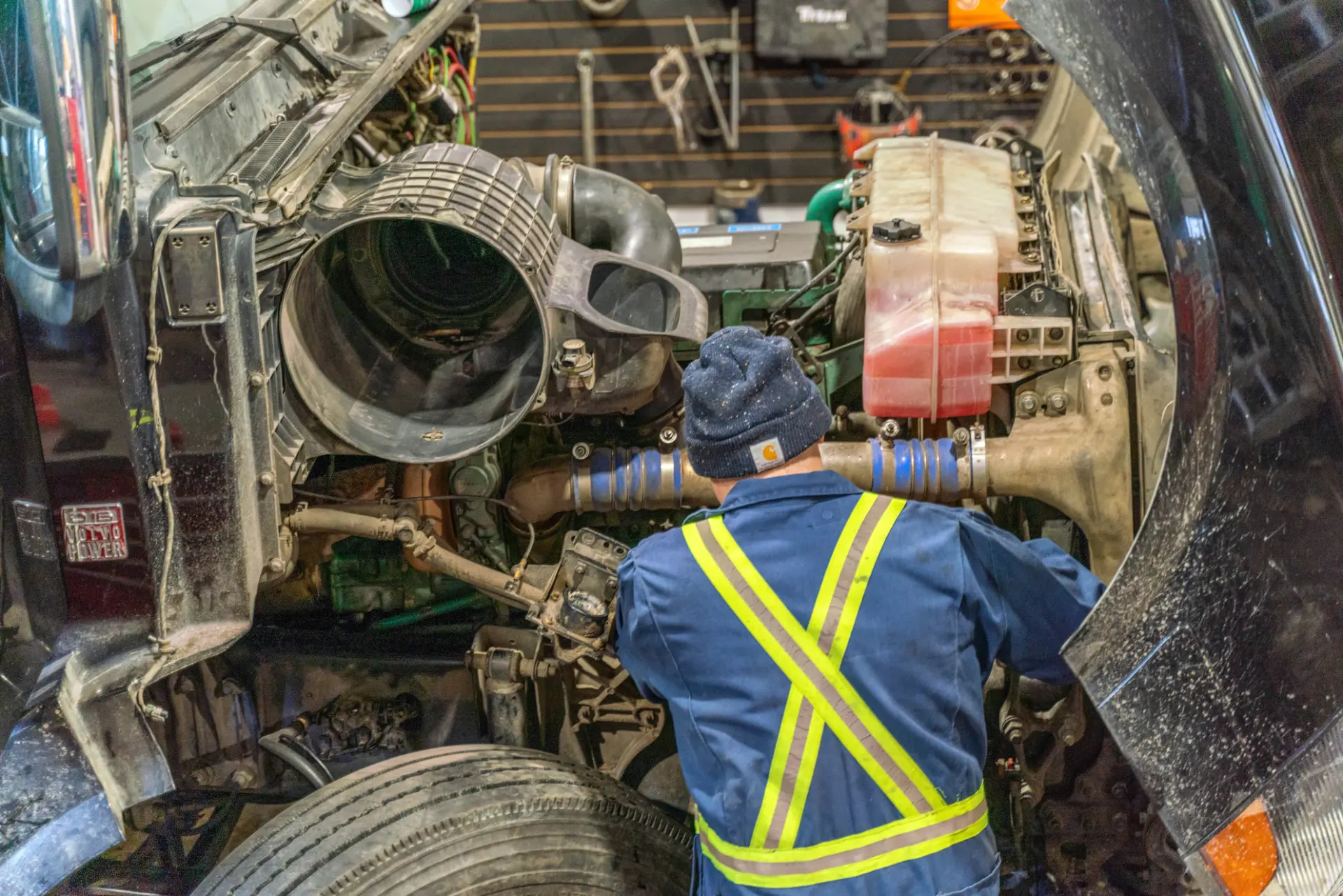
Unplanned repairs in heavy truck fleets directly reduce profit margins by increasing operating costs, reducing revenue generation, and accelerating asset wear. A single breakdown can cost anywhere from several hundred to several thousand dollars per day when downtime, labor, missed loads, and secondary damage are combined. The total impact varies by fleet size, truck utilization, and duty cycle, but high-utilization fleets experience the most immediate financial loss because every hour off the road removes revenue potential. FleetGo Heavy Duty works with fleets to identify where these losses occur and how to reduce them before they compound.
Where Unplanned Repairs Actually Cost You Money
Unplanned repairs do not create a single cost. They trigger multiple cost layers at the same time, including direct expenses and indirect operational losses. These costs are often additive, meaning downtime, labor premiums, and missed revenue can occur simultaneously, increasing total financial impact beyond the repair invoice itself.
The dominant cost driver depends on the situation. For high-revenue trucks, downtime and missed loads typically exceed repair costs. For lower-utilization fleets, repair cost and labor premiums may represent a larger portion of total impact.
Downtime, Missed Loads, And Revenue Loss
The most direct loss is revenue that cannot be earned while the truck is out of service. This includes missed loads, delayed deliveries, or underutilized routes.
A typical heavy truck can generate hundreds to over a thousand dollars per day depending on load type and route. Full downtime eliminates this revenue entirely, while partial downtime, such as delays or reduced capacity, still reduces earnings and can disrupt multiple scheduled loads.
Downtime also creates scheduling inefficiency. A truck that goes down mid-route can disrupt multiple loads, not just the current one, especially if backup equipment or drivers are not immediately available.
Emergency Labor And Parts Premiums
Unplanned repairs are often completed under time pressure. This leads to higher labor rates, expedited parts shipping, and limited ability to compare options or plan work efficiently.
Emergency repairs may increase labor costs by 25% to 50% compared to scheduled work, especially during off-hours or when overtime is required. Parts may also carry premiums when sourced quickly or when limited availability restricts options.
Not all repairs incur the same premiums. Standard repairs during business hours may remain close to normal cost, while urgent or after-hours breakdowns typically result in higher expenses.
Secondary Damage From Delayed Repairs
When a minor issue is not addressed early, it can lead to larger failures. For example, a coolant leak can lead to overheating and engine damage, or a worn bearing can lead to drivetrain failure.
Secondary damage can develop quickly under load or gradually over time depending on the system involved. Continued operation under stress increases the likelihood that multiple components will be affected.
This is where unplanned repairs shift from isolated events to compounding cost drivers.
The Hidden Costs Most Fleet Owners Overlook
Some of the most significant financial impacts do not appear directly on repair invoices. These indirect costs affect efficiency, productivity, and long-term revenue stability.
Direct costs are visible in financial statements, such as repair invoices and labor charges. Indirect costs include lost productivity, scheduling disruption, and customer impact, which are harder to quantify but often equal or exceed direct costs.
Driver Idle Time And Scheduling Disruptions
When a truck is down, drivers may be idle, reassigned, or delayed. This creates paid time without productive output, or forces dispatch to reorganize routes on short notice.
Idle cost may include hourly wages, delayed pay-per-mile earnings, or opportunity cost when drivers could have been generating revenue. Reassignment can reduce idle time, but it rarely eliminates disruption entirely, especially in tightly scheduled operations.
Scheduling disruptions can extend beyond one driver. Dispatch teams may need to reshuffle multiple loads, adjust delivery windows, or reassign equipment across the fleet.
Increased Fuel And Operating Inefficiency
Mechanical issues often reduce efficiency before they cause a full breakdown. Poor engine performance, drivetrain issues, or improperly functioning components can increase fuel consumption by several percentage points depending on severity.
When repairs are delayed, trucks may continue operating in a degraded state. This increases cost per mile and accelerates wear on related components.
In most cases, efficiency returns to normal after repair if no permanent damage has occurred. However, prolonged operation under degraded conditions can lead to lasting performance issues.
Customer Penalties And Contract Risk
Missed or delayed deliveries can lead to penalties, reduced contract value, or loss of future work. Some contracts include service-level requirements that directly tie performance to payment, such as late delivery penalties or missed delivery windows.
Occasional delays may be tolerated depending on the customer and agreement, but repeated failures increase the risk of financial penalties, reduced contract terms, or loss of business.
This risk is often underestimated because it does not appear as a direct repair cost, but it can exceed mechanical expenses over time.
Which Repairs Create The Largest Financial Impact
The largest financial impact comes from repairs that combine high downtime, high cost, and moderate to high frequency. These typically involve core systems required for operation.
Frequency and severity must be evaluated together. A rare catastrophic failure may be expensive, but repeated moderate-cost failures can create equal or greater total loss over time.
Repair TypeDowntime ImpactCost SeverityFrequencyEngine failure or major internal damageVery high, multi-day to weeksVery highLow to moderateTransmission failureHigh, multi-dayHighModerateAftertreatment system failureModerate to high, depending on parts availabilityHighModerate to highCooling system failure leading to overheatingHigh if engine damage occursHigh to very highModerateBrake system failure requiring repairImmediate out-of-serviceModerate to highModerateElectrical system faults affecting operationVariable, can be intermittent or extendedModerateHighTire blowouts or failuresShort-term downtime but high disruptionLow to moderate per eventHigh
Impact varies by fleet type and duty cycle. Long-haul fleets may experience higher downtime costs per event, while local or high-frequency route fleets may experience greater cumulative impact from repeated moderate failures.
Why Reactive Repairs Lead To Compounding Failures
Reactive repairs address problems only after failure occurs. This approach focuses on restoring operation rather than identifying root causes or preventing recurrence.
A root cause is the underlying issue that leads to failure, not just the visible symptom. For example, a failed component may be replaced, but if contamination, misalignment, or overheating is not addressed, the same failure can occur again.
Not all repeat failures are caused by missed root causes. Operating conditions such as load, environment, and usage patterns can also contribute. However, failure to identify root causes increases the likelihood of repeated breakdowns.
Compounding failures occur because systems in heavy trucks are interconnected. For example, cooling system issues can affect engine performance, and electrical faults can impact multiple systems simultaneously.
When Preventive Maintenance Becomes More Cost-Effective
Preventive maintenance becomes more cost-effective when the cost of planned service is lower than the combined cost of downtime, emergency repair premiums, and secondary damage risk.
For example, if a preventive service costs a fixed amount but prevents a breakdown that would result in several days of downtime and higher repair cost, the preventive action provides a net financial benefit.
High utilization typically refers to trucks operating near full capacity in terms of hours, mileage, or load demand. In these fleets, even short downtime periods create significant revenue loss, making preventive maintenance more valuable.
Preventive maintenance reduces failure frequency but does not eliminate all failures. Its value comes from lowering the probability and severity of high-impact breakdowns.
How FleetGo Heavy Duty Helps Reduce Unplanned Repair Costs In Edmonton
FleetGo Heavy Duty works with fleets in Edmonton to reduce unplanned repair costs by focusing on failure patterns, not just individual repairs.
This includes structured maintenance planning, targeted diagnostics, and inspection programs designed to identify issues before they escalate. Structured maintenance refers to scheduled inspections and service intervals based on usage and system condition. Targeted diagnostics involve identifying underlying causes of recurring failures rather than only replacing failed components.
Performance can be tracked through metrics such as downtime frequency, repair recurrence rates, and overall fleet reliability. These indicators help fleets measure whether unplanned repair costs are decreasing over time.
By shifting from reactive repairs to structured maintenance and targeted diagnostics, fleets can reduce downtime, lower repair frequency, and improve operational consistency.
More Articles
5 Common Issues Found During CVIP Inspections in Edmonton
What Makes a Heavy Truck Repair Shop Reliable for Fleets
Signs Your DPF Needs Cleaning vs Replacement
Contact FleetGo
Get in touch with Fleetgo today to request a quote or to schedule in-shop or mobile services in Edmonton & the surrounding area! Our mobile service extends to a 100km radius around Edmonton for emergency roadside assistance & mobile truck & fleet repairs, including Sherwood Park, Spruce Grove, Fort Saskatchewan, St. Albert, Stony Plain, along Highway 16, & more!