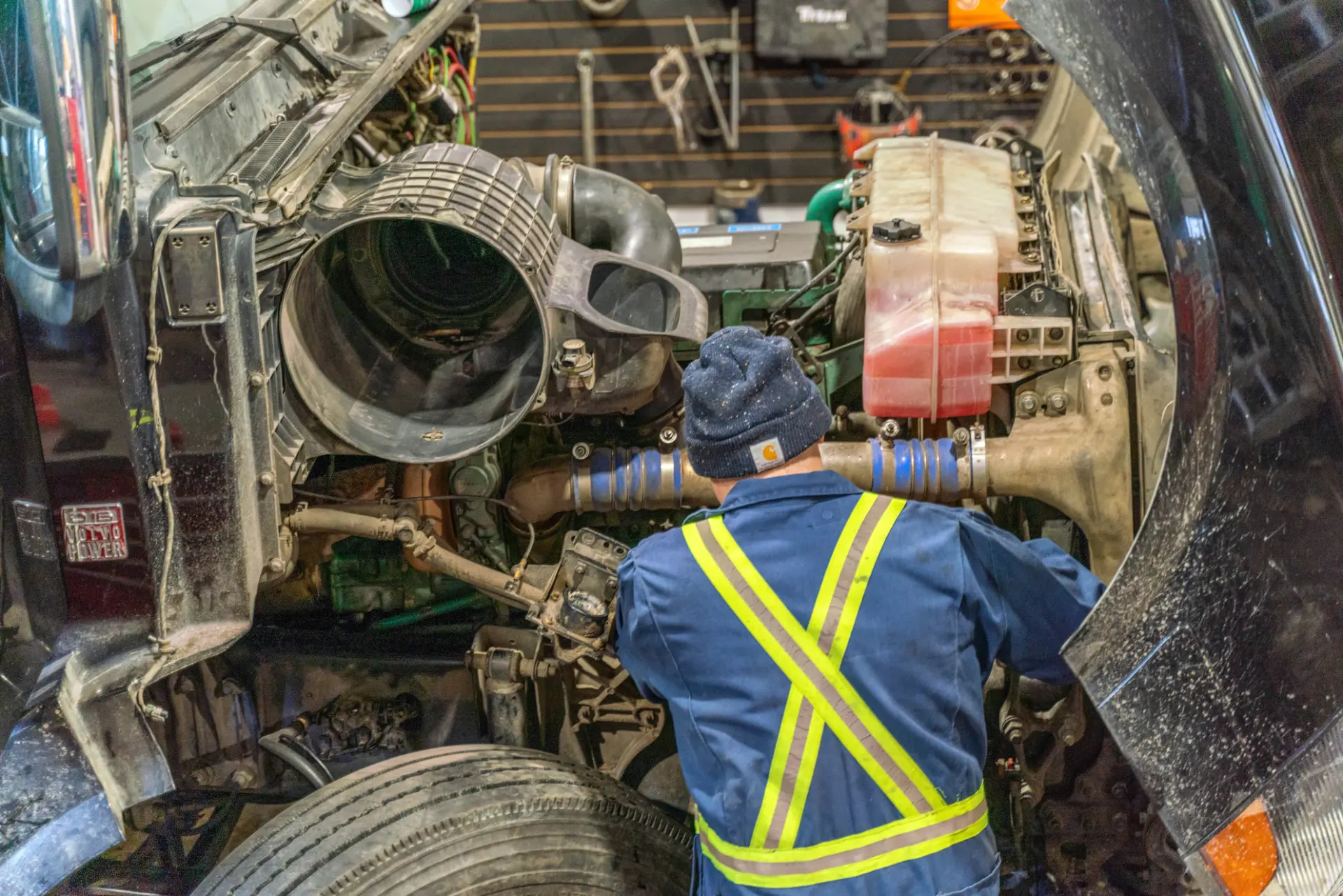
Why Uneven Brake Wear Signals Bigger System Issues
Uneven brake wear signals caliper, slack adjuster, air pressure, or suspension issues that increase stopping risk and inspection failure likelihood.

Uneven brake wear indicates that braking force is not being applied evenly across the axle or between wheel ends. In commercial hydraulic and air brake systems, this condition usually points to mechanical or air system faults rather than normal material wear. Minor lining variation can occur with load differences, but pronounced side to side or axle to axle wear differences indicate a system issue. Replacing pads or shoes without correcting the underlying cause allows the imbalance to continue, which increases stopping instability, component damage, and inspection failure risk, which is how FleetGo approaches brake system diagnosis for heavy vehicles.
Seized or Restricted Brake Components
Brake assemblies depend on smooth mechanical movement. The most common restrictions include:
- Corroded slide pins that prevent even caliper movement
- Frozen caliper pistons that keep one side partially applied
- Seized bushings or hardware that limit component travel
- Contamination from debris or corrosion buildup
When restriction occurs, one side may apply braking force continuously while the other contributes less. This leads to heat buildup, rapid lining wear on one wheel end, and reduced braking contribution on the opposite side. Overheating from drag can change friction material properties, worsening imbalance and accelerating repeat wear.
Slack Adjuster Misalignment
On air brake systems, slack adjusters control how far pushrods travel to apply brakes. Improper function can result from incorrect manual adjustment or failure of automatic slack adjusters. If one adjuster is out of specification, braking force is delayed or reduced on that wheel end. The opposite side compensates, wearing faster and overheating. Pushrod stroke should be measured during inspections, as excessive travel places the vehicle outside allowable limits and contributes to inspection failure risk.
Air Pressure Imbalance
Brake chambers rely on consistent air pressure delivery. Imbalance can come from:
- Line restrictions limiting airflow
- Chamber diaphragm problems
- Valve performance issues
- Air leaks reducing available pressure
Reduced pressure on one side lowers braking force at that wheel end, causing the other side to handle more load and wear faster. Imbalance affects directional stability during braking, especially under heavy stops where full system pressure is required.
Suspension and Alignment Faults
Suspension components affect how braking force is transferred to the road. Worn bushings, misaligned axles, damaged suspension parts, uneven weight distribution, or mismatched tire diameter and inflation can cause one wheel to carry more braking load than the other. These issues affect vehicle stability and increase lining wear differences across the axle.
Why Replacing Pads or Shoes Alone Does Not Fix the Problem
Brake linings are the visible symptom, not the cause. Installing new pads or shoes without correcting mechanical restriction, adjustment faults, or air imbalance leads to repeated uneven wear because force distribution remains unequal. This repeat failure cycle shortens service intervals and increases operating cost. Corrective diagnosis is part of comprehensive brake service such as commercial brake repair, where system level issues are identified instead of replacing friction components alone.
Safety Risk and Inspection Failure
Uneven brake wear increases stopping instability because braking force is not balanced across the axle. This can lead to:
- Vehicle pull during braking
- Longer stopping distances
- Overheating on one wheel end
- Reduced control during emergency stops
The Commercial Vehicle Inspection Program evaluates brake condition, pushrod stroke, component movement, and system balance. Vehicles with excessive wear difference, improper adjustment, or component restriction are more likely to fail inspection and be removed from service. Uneven brake application can also influence ABS or electronic brake system response because wheel speed differences affect system modulation.
Addressing the Root Cause
Correcting uneven wear requires system diagnosis rather than part replacement alone. This includes checking component free movement, verifying slack adjuster function, measuring pushrod travel, checking for air leaks, and confirming air delivery performance. These inspection steps are standard in heavy truck and commercial fleet service environments such as FleetGo, where brake performance is evaluated as a complete system rather than individual components. Drivers or fleet operators noticing uneven wear should book a brake inspection before further operation.
More Articles
What Makes a Heavy Truck Repair Shop Reliable for Fleets
Signs Your DPF Needs Cleaning vs Replacement
Which Heavy Truck Repairs Deliver the Highest ROI for Fleet Uptime
Contact FleetGo
Get in touch with Fleetgo today to request a quote or to schedule in-shop or mobile services in Edmonton & the surrounding area! Our mobile service extends to a 100km radius around Edmonton for emergency roadside assistance & mobile truck & fleet repairs, including Sherwood Park, Spruce Grove, Fort Saskatchewan, St. Albert, Stony Plain, along Highway 16, & more!