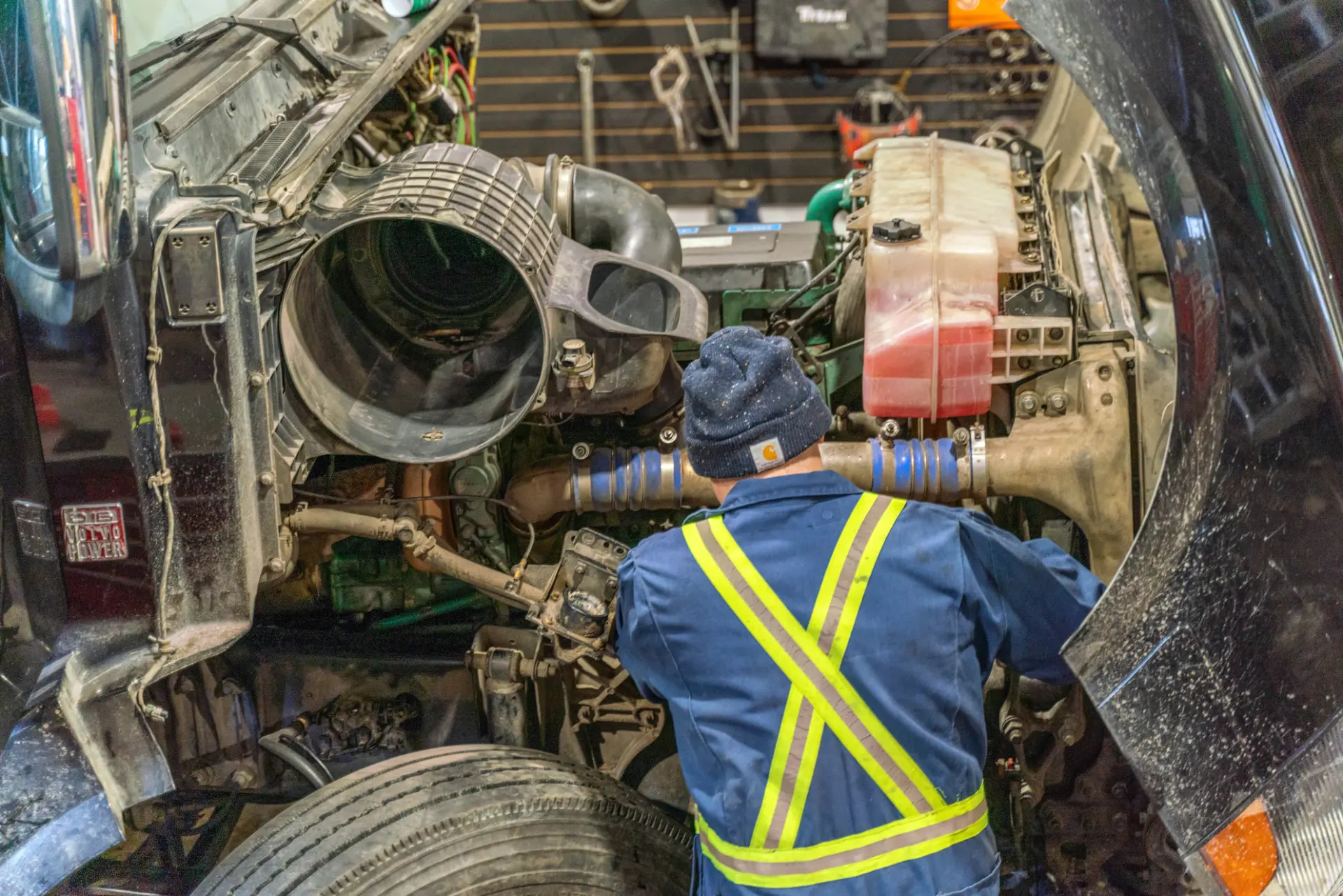
When to Call Mobile Truck Repair vs Driving to a Shop
Determine whether mobile truck repair or a repair shop is the best option based on safety, downtime, repair severity, and operating costs.

Deciding when to call mobile truck repair versus driving to a shop depends on the severity of the problem, safety risks, distance, and the potential cost of additional downtime or damage. In some situations, continuing to drive is the fastest and most cost-effective option. In others, attempting to reach a shop can increase repair costs, create safety hazards, or result in an avoidable roadside breakdown. FleetGo Heavy Duty helps fleet managers and drivers evaluate these decisions based on operational risk rather than assumptions.
What Factors Determine the Right Repair Decision
The decision between mobile repair and driving to a shop should be based on four primary factors: the severity of the mechanical issue, proximity to repair facilities, operational safety, and the impact on schedules and equipment availability.
Severity of Mechanical Failure
The severity of the mechanical issue is usually the most important factor. Certain failures create an immediate risk of additional damage or unsafe operation, while others may allow the vehicle to continue operating for a limited period.
Engine overheating, loss of oil pressure, brake system failures, steering issues, driveline failures, severe air leaks, and major coolant loss typically require the vehicle to stop operating until properly assessed. Continuing to drive in these situations can increase repair costs significantly and may create catastrophic component failure.
Less severe concerns, such as minor electrical faults, sensor issues, battery problems, lighting failures, or limited air system leaks, may allow for either mobile repair or safe travel to a repair facility depending on the circumstances.
Not every fault falls clearly into either category. When drivers or fleet managers cannot confidently determine the severity of a problem, uncertainty itself should be treated as a reason to seek professional assessment before continuing operation.
Distance to the Nearest Repair Shop
Distance affects both risk and downtime. A truck located a few kilometres from a repair facility presents a different decision than one operating on a remote highway, industrial site, or rural route.
Even relatively minor mechanical issues can become more serious when vehicles must travel long distances before receiving service. Fleet managers should evaluate not only the distance itself but also the route conditions, weather, terrain, and availability of roadside assistance resources.
The farther a truck must travel with a known defect, the greater the risk of secondary failures and additional downtime. However, acceptable travel distance varies considerably depending on the type of fault, operating conditions, towing availability, technician response times, and access to mobile repair coverage.
Safety Risks of Continuing to Drive
Safety considerations should override cost or scheduling concerns. Drivers should not continue operating vehicles when the defect affects braking performance, steering control, visibility, structural integrity, tire safety, or the ability to operate the vehicle predictably.
Regulatory requirements may also prohibit continued operation in certain situations. CVSA out-of-service criteria, provincial regulations, and company safety policies may each independently require that a vehicle be removed from service.
Even if a vehicle remains technically operable, it may not be safe or legally compliant to continue driving. Likewise, warning indicators and fault codes should not be ignored simply because the vehicle appears to operate normally. Certain faults require professional evaluation despite the absence of obvious symptoms.
When there is uncertainty about operational safety, stopping the vehicle and requesting professional assessment typically presents less risk than attempting to reach a repair facility.
Impact on Load, Schedule, and Downtime
The operational impact of a breakdown can vary substantially depending on the load being transported, customer commitments, equipment availability, and fleet redundancy.
Time-sensitive deliveries, perishable goods, hazardous materials, oversized loads, and contract-critical shipments may require different repair decisions than standard freight operations.
In some situations, immediate mobile repair may minimize disruption and return equipment to service faster than arranging towing, transportation, shop intake, and repairs. In other cases, driving directly to a facility may reduce overall downtime if extensive repairs are anticipated.
The appropriate decision often depends on the total operational cost of the delay rather than the repair cost alone.
Situations Where Mobile Truck Repair Is the Better Option
Mobile repair generally provides the greatest value when the risk of continued operation exceeds the inconvenience or cost of dispatching a technician.
Breakdown on Highway or Remote Locations
Highway breakdowns, rural operating environments, industrial sites, and remote work locations often justify mobile repair because transportation to a shop can create significant additional downtime and expense.
In these situations, mobile service may restore operation faster than arranging towing, coordinating transportation, and waiting for shop availability. This becomes increasingly important when specialized equipment, remote job sites, or time-sensitive deliveries are involved.
Issues That Worsen With Continued Driving
Some mechanical failures become substantially more expensive when the vehicle continues operating. Cooling system failures, driveline concerns, bearing issues, air leaks, lubrication problems, and certain electrical faults can escalate rapidly if ignored.
Secondary damage refers to additional failures caused by continued operation after the initial defect occurs. For example, a minor cooling system issue may eventually lead to engine damage, or a driveline vibration may result in component failure elsewhere in the system.
Stopping operation early and requesting mobile assessment can sometimes prevent component failures that would otherwise require major repairs or extended downtime. The cost of a mobile service call is often significantly lower than the cost of secondary damage caused by continued operation.
Electrical, Air, or Minor Mechanical Failures
Many roadside issues can be diagnosed and repaired without transporting the vehicle to a shop. Electrical problems, battery failures, charging system issues, air system leaks, lighting concerns, sensor faults, starter problems, and certain mechanical adjustments are frequently addressed through mobile service.
Not all electrical issues present the same level of risk. Some faults affect convenience or accessory systems, while others can affect drivability, safety systems, or regulatory compliance.
Whether mobile repair can fully resolve the issue depends on parts availability, access conditions, diagnostic requirements, and the severity of the underlying failure. Major engine failures, transmission replacements, extensive driveline repairs, and repairs requiring specialized lifting equipment or shop-based diagnostics typically exceed the practical scope of mobile service.
When Driving to a Shop Makes More Sense
Mobile repair is not always the most efficient or economical solution. Certain conditions make transportation to a repair facility the better decision.
Non-Critical Issues That Allow Safe Operation
When the vehicle remains safe, compliant, and unlikely to suffer additional damage, driving to a repair facility may reduce costs and improve repair efficiency. Examples may include minor warning lights, scheduled maintenance concerns, non-critical performance issues, minor vibration concerns, or defects that require additional diagnostic equipment unavailable in the field.
The severity, source, and progression of a vibration or performance concern often determine whether continued operation remains appropriate. Similarly, a vehicle may remain operational while still carrying an elevated risk of further mechanical damage. The decision should always be based on the likelihood that continued operation will create additional risk.
Repairs Requiring Specialized Equipment
Certain repairs require equipment, lifting capacity, tooling, or shop environments that cannot reasonably be replicated through mobile service. Examples include major engine repairs, transmission replacements, extensive driveline repairs, frame repairs, alignments, emissions diagnostics, complex welding, and repairs requiring heavy lifting equipment or specialized testing systems. Attempting to perform these repairs in the field may increase both cost and downtime.
Cost Tradeoffs Between Mobile and In-Shop Work
Mobile service eliminates towing and transportation delays but may involve higher hourly rates, travel charges, or operational limitations.
In-shop repairs often benefit from greater equipment availability, easier access to parts, multiple technicians, and controlled working conditions. When a repair is expected to require extensive labour or multiple diagnostic procedures, transportation to a shop may provide better overall value.
Repair decisions should also account for driver downtime, lost revenue opportunities, delivery penalties, equipment utilization, and broader operational disruption.The lowest repair invoice does not always produce the lowest total operating cost.
Common Mistakes That Lead to Bigger Repair Costs
Repair decisions made under pressure often create avoidable costs when warning signs or operational risks are underestimated.
Driving With Hidden Damage
Some failures create damage that is not immediately visible. Hidden damage refers to internal or progressive failures that may not immediately affect drivability but continue to worsen during operation.
Minor overheating events, lubrication problems, driveline issues, brake defects, and air system failures can appear manageable while causing progressive internal damage. Continuing to operate equipment without understanding the root cause can significantly increase repair costs and downtime.
Calling Mobile Repair Too Late
Waiting too long to request service can eliminate the advantages of mobile repair. Problems that might have been resolved quickly on-site can develop into failures requiring towing, major component replacement, or extended shop repairs. Early assessment often provides more repair options and lower total costs.
Misjudging Temporary Fixes
Temporary repairs are intended to restore operation under specific conditions, not necessarily to eliminate the underlying problem permanently.
The amount of time a temporary repair remains suitable depends on the type of repair, operating conditions, and the recommendations provided by the technician or equipment manufacturer. Treating temporary repairs as complete solutions can result in repeat failures, increased downtime, and additional damage if follow-up repairs are delayed.
Choosing the Right Repair Option for Your Fleet in Edmonton
Fleet managers operating under time pressure should evaluate repair decisions using a consistent framework. Safety should be evaluated first, followed by the risk of additional damage, operational impact, and whether the repair can reasonably be completed in the field.
The key questions are whether the vehicle can continue operating safely, whether additional damage is likely, how downtime will affect operations, and whether the required repair can reasonably be completed in the field.
When safety concerns, escalating damage risk, or operational uncertainty exist, conservative decision-making typically reduces long-term costs. The objective is not simply restoring operation quickly, but restoring operation without creating additional risk exposure.
In Edmonton and northern Alberta, seasonal weather conditions, long highway distances, industrial operating environments, and remote job sites can significantly influence whether mobile repair or shop service provides the better outcome.
How FleetGo Heavy Duty Supports Both Mobile and In-Shop Repairs
FleetGo Heavy Duty supports both mobile and in-shop repair strategies depending on the specific operational requirements of the vehicle, fleet, and repair condition.
Access to both mobile and in-shop repair capabilities allows repair recommendations to be based on safety, operational requirements, and repair feasibility rather than being limited to a single service model.
By assessing safety risks, repair complexity, downtime exposure, and equipment requirements, FleetGo Heavy Duty helps drivers and fleet managers determine whether immediate mobile service or transportation to a repair facility provides the most practical and cost-effective solution.
More Articles
What Makes a Heavy Truck Repair Shop Reliable for Fleets
Signs Your DPF Needs Cleaning vs Replacement
Which Heavy Truck Repairs Deliver the Highest ROI for Fleet Uptime
Contact FleetGo
Get in touch with Fleetgo today to request a quote or to schedule in-shop or mobile services in Edmonton & the surrounding area! Our mobile service extends to a 100km radius around Edmonton for emergency roadside assistance & mobile truck & fleet repairs, including Sherwood Park, Spruce Grove, Fort Saskatchewan, St. Albert, Stony Plain, along Highway 16, & more!