DPF Regen Keeps Failing: What Could Be Causing It?
DPF regen keeps failing? Learn how sensor faults, soot buildup, exhaust temperatures, and engine problems cause repeated regeneration failures.

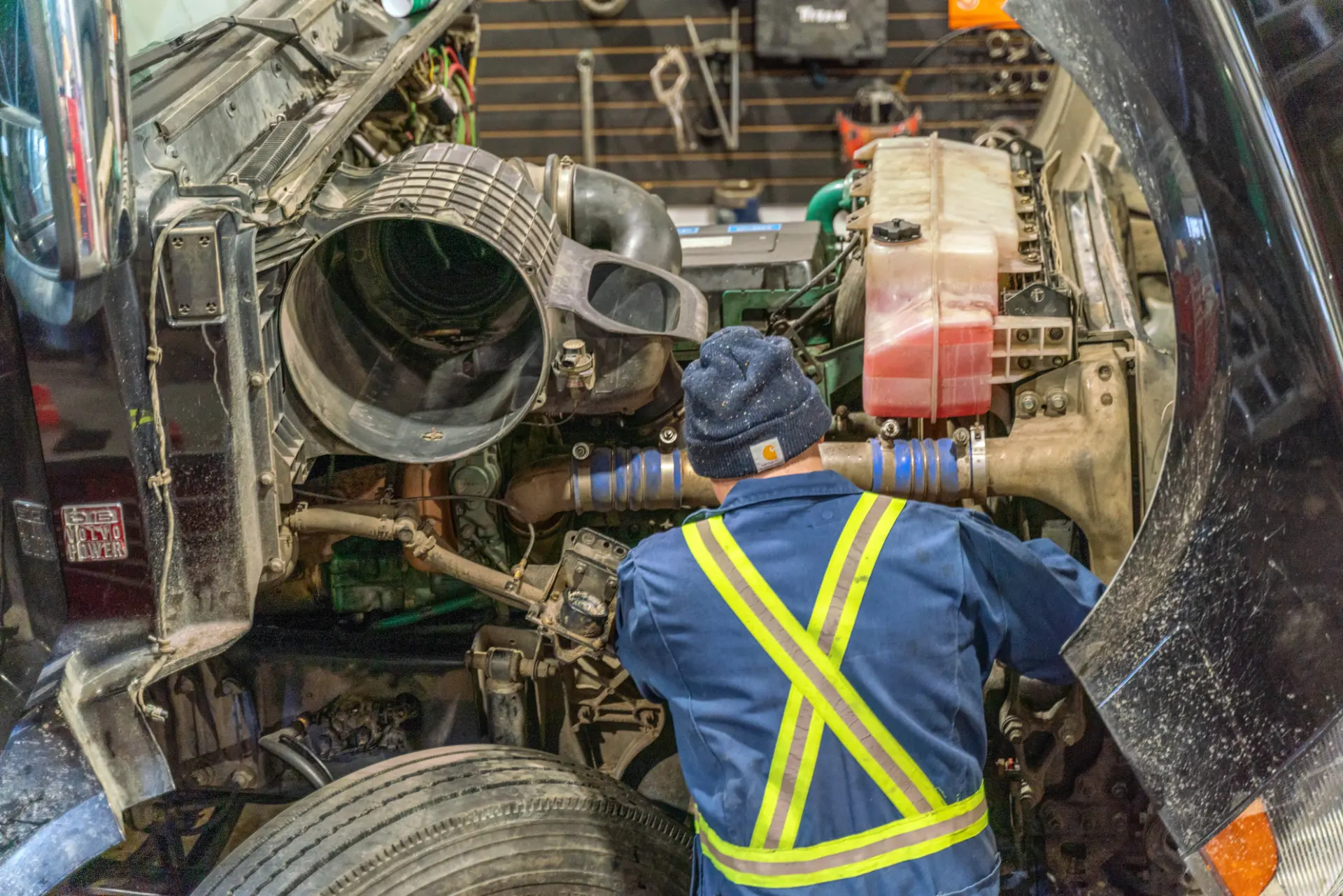
If your DPF regen keeps failing, the problem may involve more than a clogged diesel particulate filter. Repeated regeneration failures, interrupted cycles, and warning lights that return shortly after regeneration often indicate an underlying issue with engine performance, exhaust temperatures, sensors, or the emissions system. Cleaning the filter without identifying the cause may leave the original problem unresolved. Fleetgo Heavy Duty provides DPF and diesel engine diagnostics in Edmonton, helping commercial truck operators identify the faults responsible for recurring regeneration problems.
Repeated Regen Failure Is Usually a Symptom, Not the Diagnosis
A diesel particulate filter (DPF) captures soot from engine exhaust, while regeneration uses elevated exhaust temperatures to burn off accumulated soot. When the system cannot initiate, complete, or maintain effective regeneration, the issue does not necessarily originate inside the filter.
The engine control module monitors operating conditions and aftertreatment information to determine when regeneration is required and whether it is permitted. Faulty sensor readings, insufficient exhaust temperatures, excessive soot production, or active engine faults may prevent the process from functioning correctly.
A truck that repeatedly requests regeneration might have a genuinely restricted DPF, but it could also be responding to a separate mechanical or electronic problem. The distinction matters because cleaning or replacing the filter will not correct excessive soot production, faulty temperature readings, or other conditions that caused the regeneration problem.
What Does “Failed Regen” Actually Look Like?
Regeneration problems appear in several ways, and the pattern provides useful information about where diagnostics should begin. A regeneration that never starts presents a different set of possibilities from one that starts but stops unexpectedly or completes before the warning returns.
Regeneration Will Not Start
A regeneration request may be rejected when the engine control module determines that the necessary operating conditions have not been met. Depending on the truck's engine and emissions system, these conditions may involve engine temperature, fuel level, active fault codes, regeneration inhibit settings, or other manufacturer-specific requirements.
Some faults prevent regeneration because the system cannot reliably monitor or control exhaust temperatures. Excessive calculated soot loading may also trigger protective restrictions that prevent a normal regeneration attempt.
The absence of regeneration does not establish that the DPF is blocked. Technicians need to identify whether the control module is preventing regeneration, which condition is responsible, and whether that restriction reflects an actual mechanical problem or incorrect information.
Regeneration Starts but Does Not Complete
A regeneration that begins but stops before completion may indicate that the system cannot maintain the conditions required to burn off accumulated soot. Insufficient exhaust temperature, interruptions during vehicle operation, and certain engine or aftertreatment faults are possible causes.
For trucks that regenerate during normal driving, extended idling, low engine loads, or repeated changes in operating conditions may interfere with the process. A regeneration that ends prematurely during a controlled service procedure requires a different investigation, particularly when fault codes or abnormal sensor readings are recorded.
Technicians should review the reason the regeneration stopped rather than assuming the filter needs another cycle. The recorded regeneration status, temperature readings, and relevant fault information help distinguish operating interruptions from equipment failures.
Regeneration Completes but the Warning Returns Quickly
A regeneration that completes successfully should reduce the soot accumulated in the filter. When the DPF warning returns unusually quickly, the engine may be producing soot faster than expected, the filter may retain excessive restriction, or the monitoring system may be reporting an inaccurate condition.
Driving patterns also influence regeneration frequency. Heavy trucks operating primarily at low engine loads or spending extended periods idling may require more active regeneration than trucks operating under conditions that support higher exhaust temperatures.
The important distinction is whether the regeneration interval is abnormal for that engine and operating duty cycle. Comparing recorded soot loading, differential pressure, regeneration history, and engine performance helps determine whether the problem is excessive soot production, incomplete soot removal, or incorrect system monitoring.
Why the DPF May Not Be the Root Cause
The DPF operates downstream of the engine and depends on other components to maintain suitable exhaust conditions. Problems elsewhere in the truck may increase soot production, interfere with regeneration, or cause the control module to misinterpret the filter's condition.
The Engine Is Producing Too Much Soot
Diesel engines produce soot during combustion, but mechanical or operating problems may increase the amount entering the exhaust system. When soot production exceeds what the aftertreatment system manages under normal operating conditions, regeneration becomes more frequent.
Excessive soot production may result from insufficient combustion air, fuel delivery problems, poor combustion, or certain engine operating conditions. The filter continues capturing particles, but removing the accumulated soot does not correct the source of the additional emissions.
A technician should investigate unusual soot accumulation alongside engine performance rather than treating each regeneration request as an isolated filter problem. Repeatedly cleaning a DPF without correcting excessive soot production may lead to the same restriction returning.
Exhaust Temperature Is Not Reaching the Required Range
Effective regeneration depends on achieving suitable temperatures within the exhaust aftertreatment system. The required temperatures and control strategies vary by engine and regeneration method, but insufficient heat prevents accumulated soot from being oxidized effectively.
Low engine loads and prolonged idling may limit exhaust temperature during normal operation. During active regeneration, problems involving the diesel oxidation catalyst, exhaust fuel dosing equipment, or other temperature-control components may prevent the system from producing the required heat.
A technician must determine whether the exhaust is actually too cool or whether the control module is receiving incorrect temperature information. Comparing commanded regeneration activity with measured temperature responses helps identify which part of the system requires further testing.
Pressure or Temperature Sensors Are Giving Incorrect Data
DPF monitoring relies on sensor information to assess exhaust conditions and support regeneration control. Differential pressure sensors measure the pressure difference across the filter, while exhaust temperature sensors help the control module monitor aftertreatment temperatures.
A restricted pressure-sensing tube, damaged hose, wiring fault, or inaccurate sensor may produce readings that do not reflect the filter's actual condition. Depending on the engine's control strategy, incorrect information may contribute to unnecessary regeneration requests, incomplete regeneration, or active faults that prevent the process from starting.
Sensor-related fault codes provide a diagnostic starting point, but they do not automatically prove that the sensor itself has failed. Technicians must also inspect the associated circuits, connections, sensing lines, and actual operating conditions before recommending replacement.
EGR, Fuel, Air, or Turbo Problems Are Affecting Combustion
The exhaust gas recirculation (EGR) system, fuel injection equipment, air intake, and turbocharger all influence combustion conditions. Faults in these systems may increase particulate emissions or affect the engine's ability to maintain the operating conditions needed for regeneration.
An EGR valve operating incorrectly may affect the intended air and exhaust gas mixture, while a restricted air intake or turbocharger problem may reduce available combustion air. Fuel injector faults may also contribute to incomplete combustion or abnormal soot production.
These conditions do not always produce an obvious drivability complaint before the DPF begins experiencing problems. Engine performance data, air-system testing, fuel-system checks, and EGR diagnostics help establish whether an upstream fault is responsible for repeated soot accumulation.
When the DPF Itself Is the Likely Problem
Although many regeneration failures originate elsewhere, the filter may become excessively loaded, restricted, or physically damaged. Determining whether the DPF is responsible requires evidence of its actual condition rather than relying exclusively on a warning light.
Excessive Soot Loading
Soot accumulates when particulate matter enters the filter faster than regeneration removes it. If regeneration remains incomplete or is repeatedly interrupted, soot loading may eventually exceed the operating range supported by normal regeneration.
Excessive loading increases exhaust restriction and may trigger engine protection strategies. At sufficiently high loading levels, some systems prohibit regeneration because attempting to burn off the accumulated material could produce unsafe temperatures.
Technicians should assess soot estimates, differential pressure, fault history, and manufacturer-specific limits before determining the appropriate corrective action. A heavily loaded filter may require controlled professional servicing, but another regeneration attempt is not always permitted or appropriate.
Ash Accumulation That Regeneration Cannot Burn Off
Unlike soot, ash consists of noncombustible material that remains inside the filter after regeneration. It originates partly from lubricant additives and other materials entering the exhaust stream, gradually occupying space within the filter.
As ash accumulates, exhaust restriction may increase even when regeneration successfully removes soot. The filter may therefore continue showing elevated restriction or require more frequent regeneration despite otherwise normal combustion conditions.
Ash accumulation requires a different response from ordinary soot loading. Where supported by the filter's condition and manufacturer requirements, specialized off-vehicle cleaning removes accumulated ash that regeneration cannot eliminate.
Internal DPF Damage or Restriction
The internal filter substrate may develop cracks, melting, blocked passages, or other physical damage. Such problems may result from excessive temperatures, abnormal contamination, mechanical damage, or prolonged operation under unsuitable conditions.
A damaged filter does not always behave like a conventionally soot-loaded filter. Blocked or melted passages may produce persistent restriction, while cracks may allow particulate matter to pass through without being captured as intended.
When testing points toward internal damage, a physical inspection and appropriate filter assessment may be necessary. Cleaning does not repair a cracked or melted substrate, so the filter's structural condition must be established before determining whether further servicing is worthwhile.
Failed Regen Pattern and Likely Diagnostic Direction
Regeneration will not start: Active fault codes, unmet operating conditions, regeneration inhibit settings, or excessive soot loading may prevent the process from beginning. Diagnostics should focus on fault information, operating conditions, and calculated soot levels.
Regeneration starts but stops: Insufficient exhaust temperature, operating interruptions, or aftertreatment faults may prevent completion. Reviewing temperature data, termination reasons, and regeneration history helps identify the interruption.
Regeneration completes but the warning returns: Excessive soot production, remaining filter restriction, or inaccurate sensor readings may trigger another warning. Comparing differential pressure, soot estimates, and engine performance helps narrow the cause.
Regeneration occurs unusually often: High soot production, repeated incomplete regeneration, operating conditions, or ash accumulation may shorten the interval between cycles. Diagnostic testing should establish whether the frequency is abnormal for the truck's duty cycle.
High exhaust restriction remains after regeneration: Excessive ash, residual soot, or internal filter damage may explain persistent restriction. Differential pressure readings should be verified before assessing the filter's physical condition.
Regeneration faults occur alongside engine performance problems: EGR, turbocharger, intake, fuel delivery, or combustion faults may contribute to excessive soot production. Engine diagnostics should address these related systems before filter servicing is recommended.
These patterns guide the initial investigation but do not confirm a specific component failure. Several faults may contribute to the same symptoms, making manufacturer-specific diagnostic information and testing necessary.
Why Repeated Forced Regens Can Be the Wrong Response
A forced or service regeneration is a controlled procedure used under manufacturer-defined conditions to remove accumulated soot. It is not a substitute for identifying why normal regeneration has failed, particularly when the same warning repeatedly returns.
Regeneration produces substantial exhaust heat, and the safety requirements become especially important when the filter is heavily loaded or the system has an unresolved fault. Some engine control systems restrict regeneration when conditions fall outside permitted limits, making further attempts inappropriate until the cause has been diagnosed.
Repeated regeneration attempts also fail to address problems such as defective sensors, insufficient exhaust heating, excessive engine soot production, or noncombustible ash accumulation. Even when a service regeneration completes, the original condition may trigger another warning shortly afterward.
Operators should stop attempting additional forced regenerations when the procedure repeatedly fails, the control system refuses the request, or fault codes and warning indicators suggest the engine requires professional attention. A red stop-engine warning, significant derate, or other serious operating condition requires following the manufacturer's shutdown and service instructions rather than attempting another regeneration.
What Should Be Tested Before Cleaning or Replacing the DPF?
DPF diagnostics should establish whether the filter is genuinely restricted, whether regeneration is functioning correctly, and whether another system is creating the problem. The testing sequence depends on the truck's fault history, engine configuration, and observed symptoms.
A technician may investigate the following:
- Active and stored fault codes: Review engine and aftertreatment fault information, including relevant operating snapshots and regeneration-related faults, to identify conditions preventing or interrupting regeneration.
- Regeneration history and status: Examine recorded regeneration frequency, unsuccessful attempts, termination reasons, and operating conditions to determine how the problem has developed.
- DPF differential pressure: Check actual pressure measurements under the specified operating conditions and inspect sensing tubes, hoses, and connections for restrictions or damage.
- Calculated soot loading: Compare the control module's soot estimate with available pressure and operating data to determine whether the reported loading is consistent with the filter's behaviour.
- Exhaust temperature performance: Assess sensor readings and temperature changes during permitted operating tests to identify incorrect measurements or insufficient exhaust heating.
- Fuel and air delivery: Investigate injector performance, air intake restrictions, boost control, and other combustion-related conditions when evidence suggests excessive soot production.
- EGR and aftertreatment components: Test relevant EGR functions, exhaust fuel dosing equipment, and diesel oxidation catalyst performance where faults or temperature behaviour indicate a problem.
- DPF ash loading and physical condition: Review service history and assess filter restriction, contamination, or internal damage when the evidence points toward the filter itself.
The results determine whether the appropriate next step involves correcting an engine fault, repairing an electrical or aftertreatment component, servicing the DPF, or replacing a damaged part. Repairs should also be followed by the manufacturer-specified verification procedures to confirm that the original fault has been resolved.
When an Edmonton Heavy Truck Needs DPF and Engine Diagnostics
Heavy-duty truck operators should arrange diagnostics when regeneration repeatedly fails, warning lights return soon after completed cycles, or regeneration requests become unusually frequent for the vehicle's normal duty cycle. Continued operation without identifying the cause may allow excessive soot accumulation, exhaust restriction, or engine performance problems to develop further.
A truck experiencing repeated regeneration faults alongside reduced power, increased fuel consumption, unusual exhaust behaviour, or active engine fault codes warrants investigation beyond the DPF alone. The urgency depends on the active warnings and manufacturer instructions, with serious engine protection warnings requiring immediate attention.
Fleetgo Heavy Duty provides EGR and DPF services for commercial trucks in Edmonton, including diagnostics, cleaning, sensor replacement, and emissions-system repairs. Our team also performs engine and electrical diagnostics to investigate faults involving related components rather than assuming the filter itself is responsible.
At Fleetgo Heavy Duty, we assess the truck's reported symptoms, fault information, and relevant system performance before determining the necessary repair. Identifying whether the problem originates in the engine, aftertreatment controls, or DPF helps avoid unnecessary filter work and reduces the likelihood of repeated regeneration failures after service.
More Articles


Alternator vs Starter Failures in Commercial Trucks
Contact FleetGo
Get in touch with Fleetgo today to request a quote or to schedule in-shop or mobile services in Edmonton & the surrounding area! Our mobile service extends to a 250km radius around Edmonton for emergency roadside assistance & mobile truck & fleet repairs, including Sherwood Park, Spruce Grove, Fort Saskatchewan, St. Albert, Stony Plain, along Highway 16, & more!