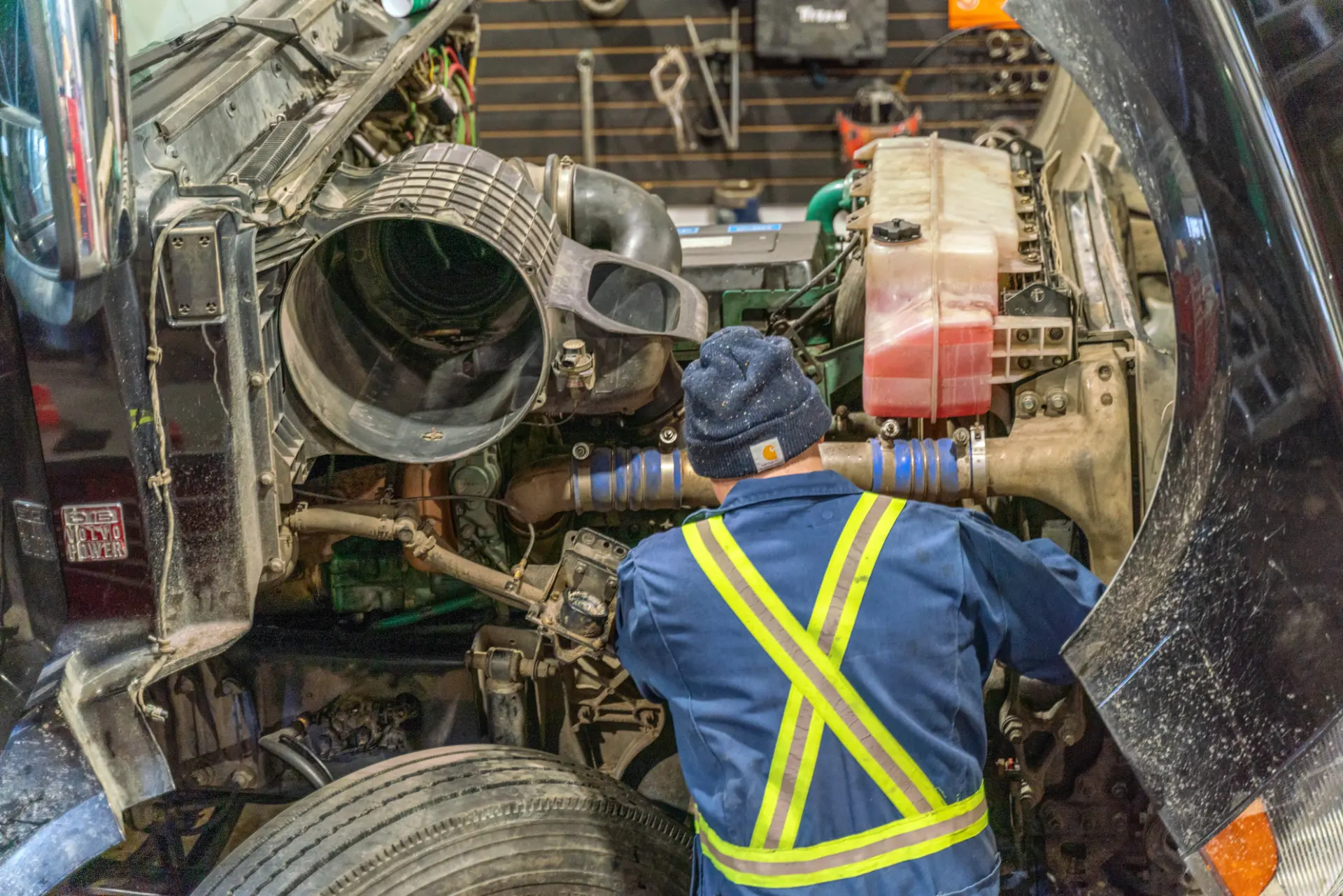
Diesel Truck Loses Power Under Load: What's Failing?

When a heavy-duty commercial diesel truck idles smoothly, starts without issue, and bobtails normally around the yard, but feels sluggish or enters engine derate when pulling a loaded trailer, it is experiencing a demand-threshold failure. This specific type of power loss is a symptom of a system hitting a capacity ceiling, rather than a single component failing entirely. Diagnosing this issue correctly is critical to minimizing downtime and avoiding the trap of replacing perfectly good parts.
Pulling heavy freight up a grade substantially increases demand across multiple engine systems at the same time. Fuel delivery must increase, the turbocharger must build higher boost pressure, and the exhaust aftertreatment system must flow freely. When any of these systems cannot meet peak demand, or when the Engine Control Module (ECM) detects out-of-range operating parameters and limits torque to protect the powertrain, the truck loses pulling power under load.
For fleet managers and owner-operators searching for reliable heavy-duty truck repair, understanding the core technical causes of load-dependent power loss is the first step toward a permanent fix.
Core Causes of Diesel Power Loss Under Load
When a heavy-duty diesel truck idles smoothly but loses power under load, the issue often traces to one of four areas: fuel delivery restrictions, charge-air boost leaks, Exhaust Gas Recirculation (EGR) faults, or high exhaust backpressure in the Diesel Particulate Filter (DPF) triggering an ECM torque derate.
1. Fuel System Restrictions and Injector Leak-Off
Fuel starvation is the primary suspect when an engine runs perfectly on flat ground but stumbles on an incline. At idle, the high-pressure pump only needs to deliver a fraction of its total capacity. Under a heavy pull, commanded fuel rail pressure spikes, and any restrictions become painfully obvious.
When actual common-rail fuel pressure falls significantly below the pressure commanded by the ECM during a loaded pull, the cause is often a restricted fuel filter, air entering the low-pressure supply side, a worn high-pressure fuel pump, or excessive injector return flow (leak-off). On High-Pressure Common Rail (HPCR) engines, worn internal injector seals can allow pressurized fuel to bleed back into the return line rather than injecting into the cylinder. When rail pressure drops below OEM thresholds, the ECM typically logs a low fuel rail pressure fault code (such as P0087) and may derate engine power until the fuel system is repaired.
In northern climates, extreme winter cold can cause paraffin wax in untreated or inadequately winter-blended Ultra-Low Sulfur Diesel (ULSD) to crystallize. This fuel gelling coats filter media, restricting flow to the high-pressure fuel pump when fuel demand rises under load.
2. Air Intake and Boost Leaks
A diesel engine produces power in proportion to the air mass delivered to its cylinders. Charge Air Cooler (CAC) cracks, loose clamps, and split turbocharger boots may leak very little at idle but open up under the elevated boost pressures generated during a heavy pull.
Because air restrictions and fuel problems can produce similar drivability complaints under load, inspecting the charge-air system is an essential part of diagnosis. Common signs of a boost leak include a whistling or hissing sound under load, elevated Exhaust Gas Temperatures (EGTs), and incomplete combustion that increases soot production and accelerates DPF loading.
3. Restricted DPF and Aftertreatment Systems
When exhaust gases cannot exit the engine freely, exhaust backpressure spikes, choking cylinder scavenging and preventing the turbocharger from spooling. The Diesel Particulate Filter (DPF) traps carbon soot and metallic ash, requiring regular active and passive regenerations.
Cleaning or replacing a restricted DPF without inspecting upstream components such as fuel injectors, turbocharger seals, and EGR coolers often leads to repeat failures. As Detroit Diesel technical support manager Vic Meloche noted in Truck News, most aftertreatment issues stem from upstream faults. Before deciding whether a DPF requires cleaning or replacement, technicians should also verify whether a fouled aftertreatment hydrocarbon doser or repeated cold-weather regeneration failures caused the soot accumulation.
4. EGR Valve and Cooler Failures
The Exhaust Gas Recirculation (EGR) system routes metered, cooled exhaust gas back into the intake manifold to lower peak combustion temperatures and reduce nitrogen oxide emissions. An EGR valve that sticks open allows excessive exhaust gas into the intake under load, displacing fresh air and reducing turbocharger boost. Conversely, an internally leaking EGR cooler allows coolant to enter the exhaust stream, where it mixes with soot and can contaminate or block the DPF substrate. Properly diagnosing and servicing both the EGR and DPF systems is necessary to restore normal exhaust flow and engine performance.
The Professional Diagnostic Workflow
Experienced technicians avoid replacing parts by guesswork and instead follow a structured diagnostic sequence, since fault codes alone often reflect downstream symptoms rather than the original cause.
A thorough evaluation typically starts by reviewing ECM fault codes and freeze-frame data to see the operating conditions present when power dropped. Technicians then compare commanded versus actual fuel rail pressure under load and test low-pressure fuel supply restrictions. Next, they pressurize the intake tract with regulated shop air or smoke to locate Charge Air Cooler or plumbing leaks that only open under boost. Finally, they evaluate actuator response and exhaust backpressure across the aftertreatment system so fleets do not replace expensive components unnecessarily.
Mobile Roadside vs. In-Shop Diagnostics
According to FleetNet America and Technology & Maintenance Council benchmarking reported by FleetOwner, roadside repairs cost roughly four times as much on average as in-shop repairs due to call-out fees, roadside labor rates, and safety logistics. At the same time, continuing to operate a truck with an active derate or unresolved mechanical fault risks stranding the vehicle in a low-speed limp mode or worsening component damage.
When searching for truck engine repair near me, dispatchers must decide the best route:
Dispatch Mobile Service When: The truck is restricted to low-speed limp mode, requires on-site winter fuel de-gelling or filter replacement, has a failed charge-air boot or clamp, or needs computer diagnostics and a stationary DPF regeneration to determine if it can safely return to base.
Schedule In-Shop Repair When: The repair requires fuel injector or high-pressure pump replacement (where clean-shop contamination control is important), off-truck DPF cleaning, EGR cooler or turbocharger replacement, or internal engine work.
Frequently Asked Questions
Heavy-duty diesel engine repair in Edmonton
Fleetgo Heavy Duty provides commercial diesel engine repair and maintenance in Edmonton, AB, operating a full-service shop on 109 Ave NW with three drive-through bays alongside mobile repair and 24/7 emergency roadside service across the surrounding region, including Highway 16, Sherwood Park, Spruce Grove, Stony Plain, St. Albert, and Fort Saskatchewan. Working with a single provider that handles both roadside breakdowns and in-shop repairs helps fleets maintain diagnostic continuity and reduce downtime.
Semi truck diagnostics in Edmonton
For semi truck diagnostics in Edmonton, Fleetgo Heavy Duty offers both in-shop and mobile diagnostic support for heavy-duty trucks, tractors, and commercial fleets. Technicians read ECM fault codes, test batteries and charging systems, and trace electrical, sensor, fuel, or air system faults to identify the actual cause of power loss before replacing parts.
DPF repair for semi trucks in Edmonton
Effective DPF repair for semi trucks in Edmonton involves checking differential pressure sensors, temperature sensors, and upstream engine components before performing a forced regeneration or removing the filter for cleaning. In Alberta's cold winters, extended idling and low exhaust temperatures can prevent passive regeneration, making it important to check for issues such as leaking EGR coolers, worn injectors, or malfunctioning aftertreatment dosers so the filter does not rapidly plug again.
Diesel fuel injection system repair for commercial trucks in Edmonton
Diagnosing diesel fuel system issues on commercial trucks in Edmonton typically involves checking fuel filters and low-pressure supply flow, verifying high-pressure common rail performance, and testing for injector return leak-off when an engine loses power under load. Addressing low rail pressure faults, fuel gelling, or worn injectors restores proper fuel delivery when hauling heavy loads.
More Articles

Alternator vs Starter Failures in Commercial Trucks

Intermittent Faults in Heavy Trucks: Why They're Hard to Fix
Contact FleetGo
Get in touch with Fleetgo today to request a quote or to schedule in-shop or mobile services in Edmonton & the surrounding area! Our mobile service extends to a 250km radius around Edmonton for emergency roadside assistance & mobile truck & fleet repairs, including Sherwood Park, Spruce Grove, Fort Saskatchewan, St. Albert, Stony Plain, along Highway 16, & more!