Hot Weather Fleet Maintenance: Avoiding Overheating and Breakdowns
Alberta summers push cooling systems, tires, and driveline fluids into severe duty. Use this fleet checklist to prevent overheating, blowouts, and breakdowns on long-haul routes.
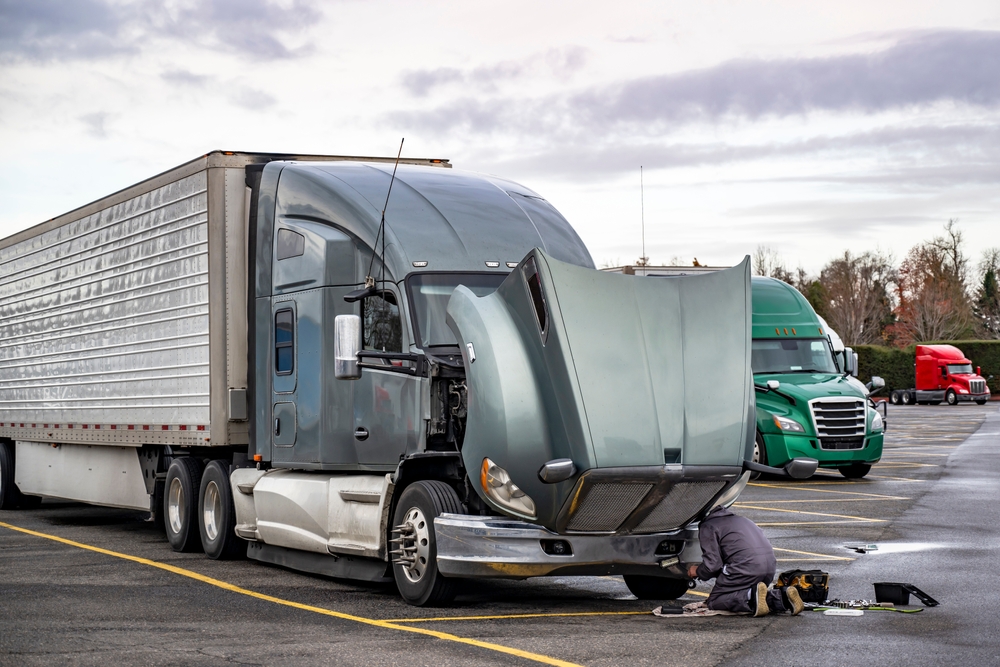
Summer hauling turns routine operation into severe duty. High ambient temperatures, radiant heat from asphalt, heavy loads, and long pulls on Alberta highways can raise coolant and drivetrain temperatures fast. Add stop-and-go city driving, strong headwinds, and A/C demand, and even well-maintained trucks can get pushed toward overheating, tire failures, and breakdowns.
Fleetgo helps fleets stay reliable through Edmonton and across Alberta with preventive maintenance planning, cooling system service, tire inspections, HVAC repairs, and mobile support within 100km when downtime hits at the wrong time.
Why Summer Heat Causes More Fleet Breakdowns
Heat affects every system that relies on fluid, airflow, and friction control. Engine bays run hotter, coolant and oil work harder, and any restriction in airflow or circulation becomes a bigger problem. A partially plugged radiator that might be fine in spring can become a breakdown in July. A tire that is slightly underinflated can build heat faster under highway speed and load. Fluids can thin, oxidize, and lose protective properties under sustained temperature, which shows up later as wear, slipping, or seal leaks.
For long-haul fleets, the downtime risk is not only mechanical. A breakdown on Highway 2 or Highway 16 can mean missed delivery windows, recovery costs, and stranded drivers in remote stretches where help is slower.
Cooling System Checklist: The Biggest Summer Priority
If you want to prevent hot-weather failures, start with the cooling system. Most summer breakdowns follow the same pattern: reduced cooling capacity plus high load equals rising temperature that never fully recovers.
Coolant health is the foundation. The correct mix supports boiling protection and corrosion inhibitors. Low coolant, weak concentration, or neglected coolant can contribute to scaling and poor heat transfer, especially under sustained load. Radiators also lose efficiency in two ways. Externally, bugs, dirt, and debris reduce airflow through fins. Internally, scaling and corrosion reduce flow and heat exchange. Both issues can exist at the same time.
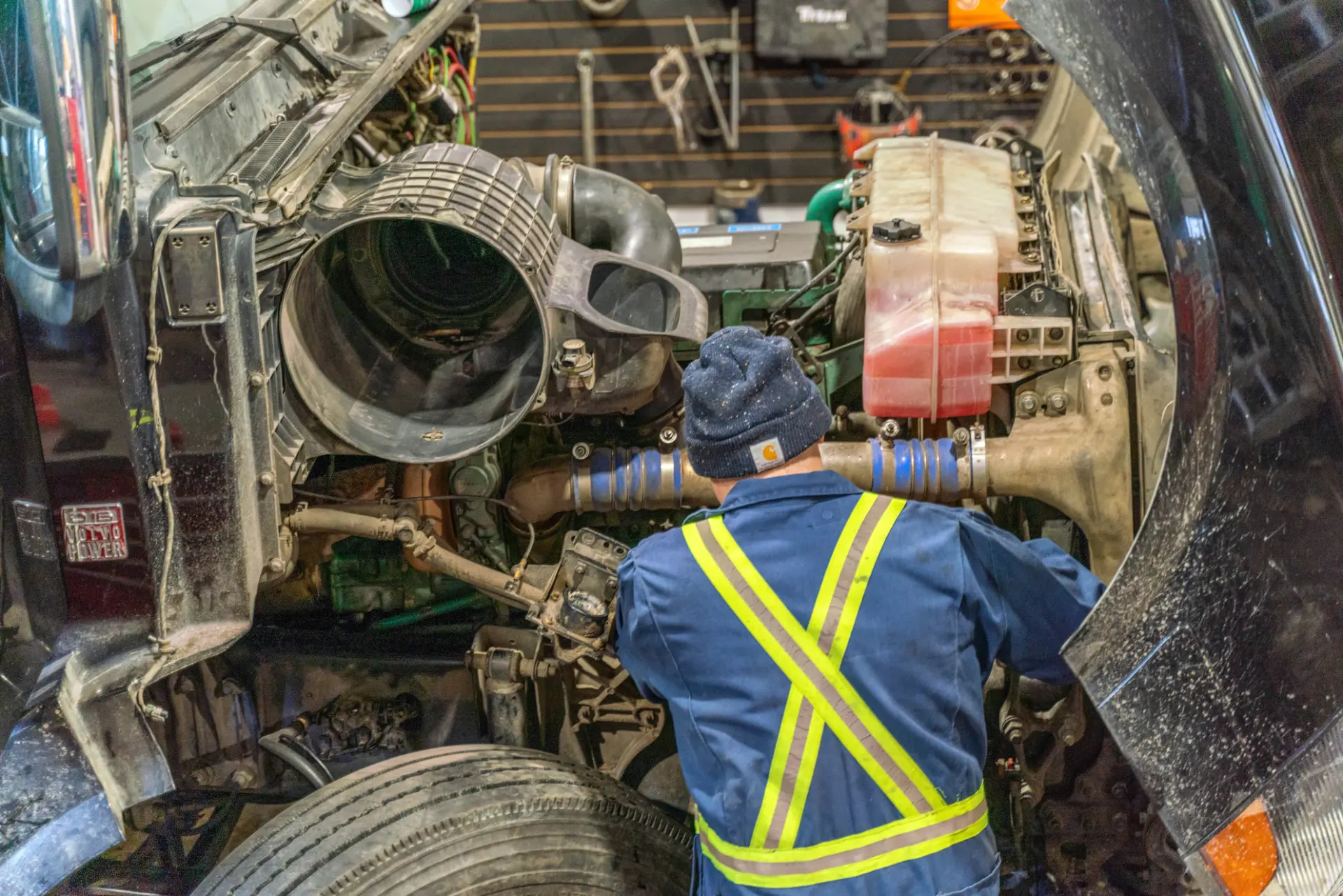
Beyond the radiator, the thermostat, water pump, fan clutch, belts, hoses, and clamps determine whether coolant actually moves and whether airflow is sufficient. Small leaks at hose ends or clamps can worsen under heat. A weak cap or overflow bottle issue can also lower system pressure and reduce boiling margin, which becomes critical during heavy pulls.
For fleets that want reliability, a pre-summer cooling system inspection is one of the best investments because it catches weak components before they fail in peak season.
Cooling system inspections and repairs:
https://www.fleetgo.ca/repairs/coolant-system-repairs
Signs Your Truck Is Overheating Under Load
Overheating is rarely “instant.” Most trucks give early signs that the system is falling behind before a full shutdown.
Watch for temperature that climbs on grades and does not recover quickly on flats. Pay attention to coolant smell, visible seepage, or steam after a pull. A fan that roars constantly can indicate the system is working overtime to compensate for restricted airflow, but a fan that never seems to engage when needed can be a separate problem. Some drivers also notice loss of cab heat at idle in certain scenarios, which can point to coolant circulation issues.
If you see repeated temperature creep, do not treat it as normal summer behavior. That is often the window where a relatively simple fix prevents a major breakdown.
Tire Heat and Blowout Risk: How Fleets Prevent It
Tires are a heat-sensitive system, and blowouts often start with heat buildup, load stress, and damage that was already present.
Underinflation is one of the most common causes of heat-related tire failure because it increases sidewall flex and raises casing temperature at highway speeds. Overloading and sustained speed also increase heat, especially on hot pavement. Uneven wear patterns from alignment or suspension problems create hot spots that fail faster under summer conditions.
A summer tire routine should include cold pressure checks, tread and sidewall inspections, bulge detection, valve stem condition, and verifying hardware torque where applicable. Fleets should also treat repeated pressure loss as a repair trigger, not a “top-off and go” routine.
Tire inspection and repair services:
https://www.fleetgo.ca/repairs/tires
A/C and HVAC Strain in Summer: Comfort Is an Operational Issue
In fleet operations, A/C is not a luxury. Cab heat and ventilation directly influence driver fatigue, focus, and comfort during long-haul routes and stop-and-go city work.
A/C systems get strained in summer when refrigerant is low, condenser airflow is weak, or cabin filtration is restricted. Belt-driven compressor issues can also show up under load and heat. If the A/C is cycling poorly, blowing warm, or taking too long to cool, it is usually a sign that the system needs attention before it fails fully during peak season.
A/C and HVAC service for heavy-duty trucks:
https://www.fleetgo.ca/repairs/hvac
Fluids That Suffer in Heat: Oil, Transmission, and Diffs
Cooling is not just coolant. Summer heat and heavy loads stress every fluid that manages friction and temperature.
Engine oil can shear and oxidize under high heat, especially in severe duty cycles. Transmission temperatures climb during towing, hauling, and stop-and-go operation, and overheated transmission fluid loses protective properties faster. Differential and axle fluids can also break down under sustained highway load and high ambient temperatures. Even power steering or hydraulic assist systems can show heat-related symptoms such as noise, reduced assist, or fluid discoloration.
For fleets, the practical approach is to treat summer as severe duty and follow service intervals that match operation, not just the calendar. If a truck runs heavy, runs hot, or runs long, fluid service needs to reflect that.
Oil and fluid service intervals:
https://www.fleetgo.ca/repairs/oil-fluid-service
Electrical and Charging Problems That Show Up in Summer
Batteries do not only fail in winter. Heat accelerates battery degradation and can reveal weak charging systems. Fleets often see slow crank hot-start issues, weak alternator output, corrosion at terminals, and intermittent electrical faults that become more frequent during summer.
If drivers report repeated slow starts after short stops, flickering electrical behavior, or recurring low-voltage warnings, it is worth testing the battery and charging system before it becomes a no-start event in the middle of a route.
A Summer Preventive Maintenance Schedule for Alberta Long-Haul Fleets
The best summer plan is one that is simple enough to follow and structured around fleet reality.
Pre-summer, prioritize cooling system checks, tire inspections, belt and hose inspection, and a review of severe duty fluid schedules. Mid-season, reassess tires, look for new leaks, confirm coolant health, and check airflow and fan operation. After peak season, review failures and wear patterns so you can adjust intervals and prevent repeat issues next year.
Fleet preventive maintenance programs.
What To Do If You Overheat on the Road
When temperature rises unexpectedly, safety and damage prevention come first. Pull over as soon as it is safe, reduce load, and avoid pushing the truck to “make the next exit” if the temperature is climbing quickly. Do not open the coolant cap when hot. Once safe, arrange support to assess the cause rather than restarting the route without understanding why the system overheated.
If you need onsite support to reduce downtime, Fleetgo’s mobile team can help in the Edmonton area and surrounding region.
Mobile fleet repairs in the Edmonton area.
If roadside support is required.
Book Hot Weather Fleet Maintenance in Edmonton
If your fleet is hauling heavy this summer, a proactive inspection is the easiest way to prevent breakdowns that cost more than the maintenance itself. Fleetgo provides cooling system service, tire inspections, HVAC repairs, and preventive maintenance planning built for Alberta conditions and real-world fleet schedules.
Schedule a summer maintenance inspection.
Call 780-455-8131
More Articles
What Makes a Heavy Truck Repair Shop Reliable for Fleets
Signs Your DPF Needs Cleaning vs Replacement
Which Heavy Truck Repairs Deliver the Highest ROI for Fleet Uptime
Contact FleetGo
Get in touch with Fleetgo today to request a quote or to schedule in-shop or mobile services in Edmonton & the surrounding area! Our mobile service extends to a 100km radius around Edmonton for emergency roadside assistance & mobile truck & fleet repairs, including Sherwood Park, Spruce Grove, Fort Saskatchewan, St. Albert, Stony Plain, along Highway 16, & more!