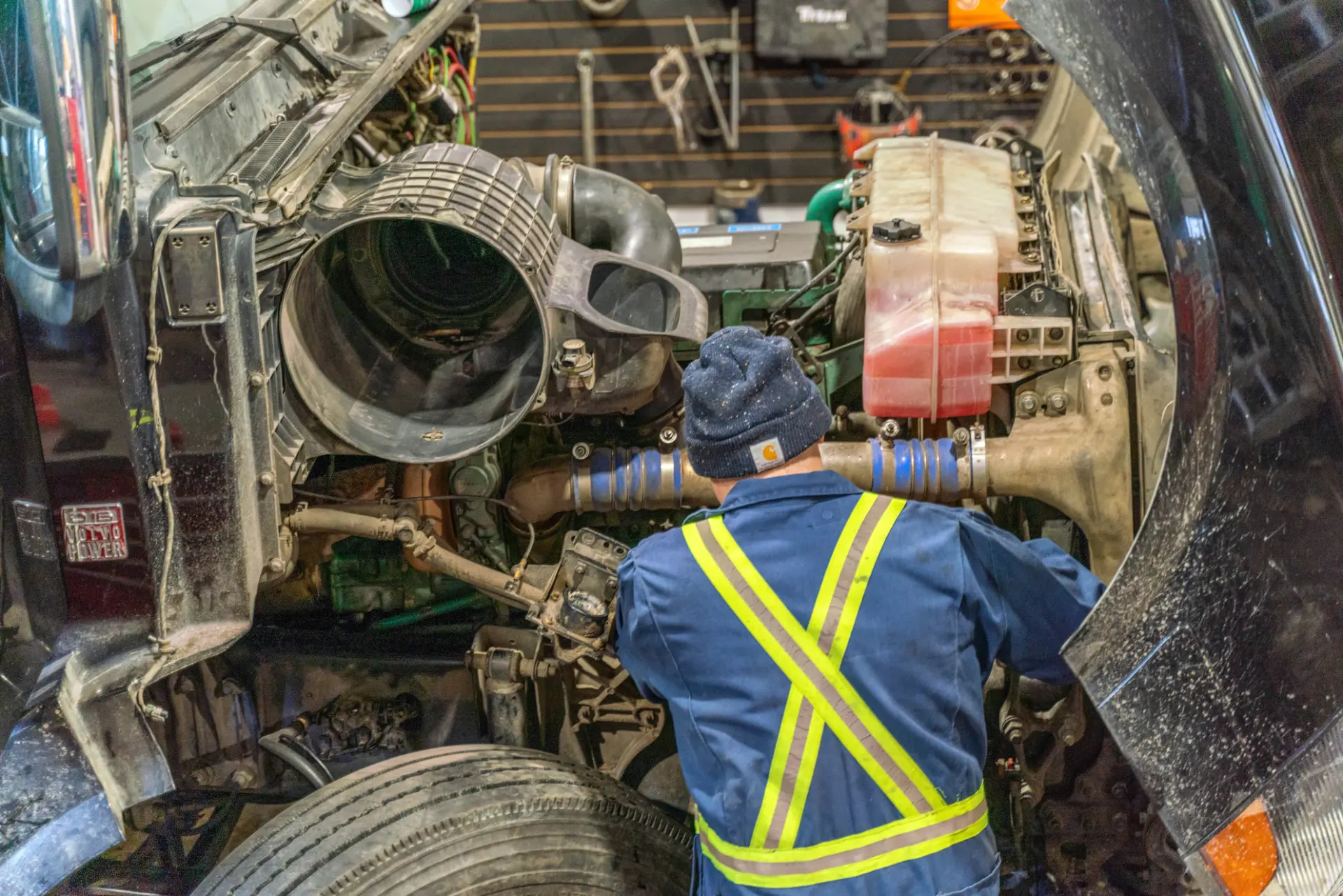
Signs Your DPF Needs Cleaning vs Replacement
Fleetgo explains when a commercial truck DPF can be cleaned and when restriction, failed cleaning, or internal damage requires replacement in Edmonton.
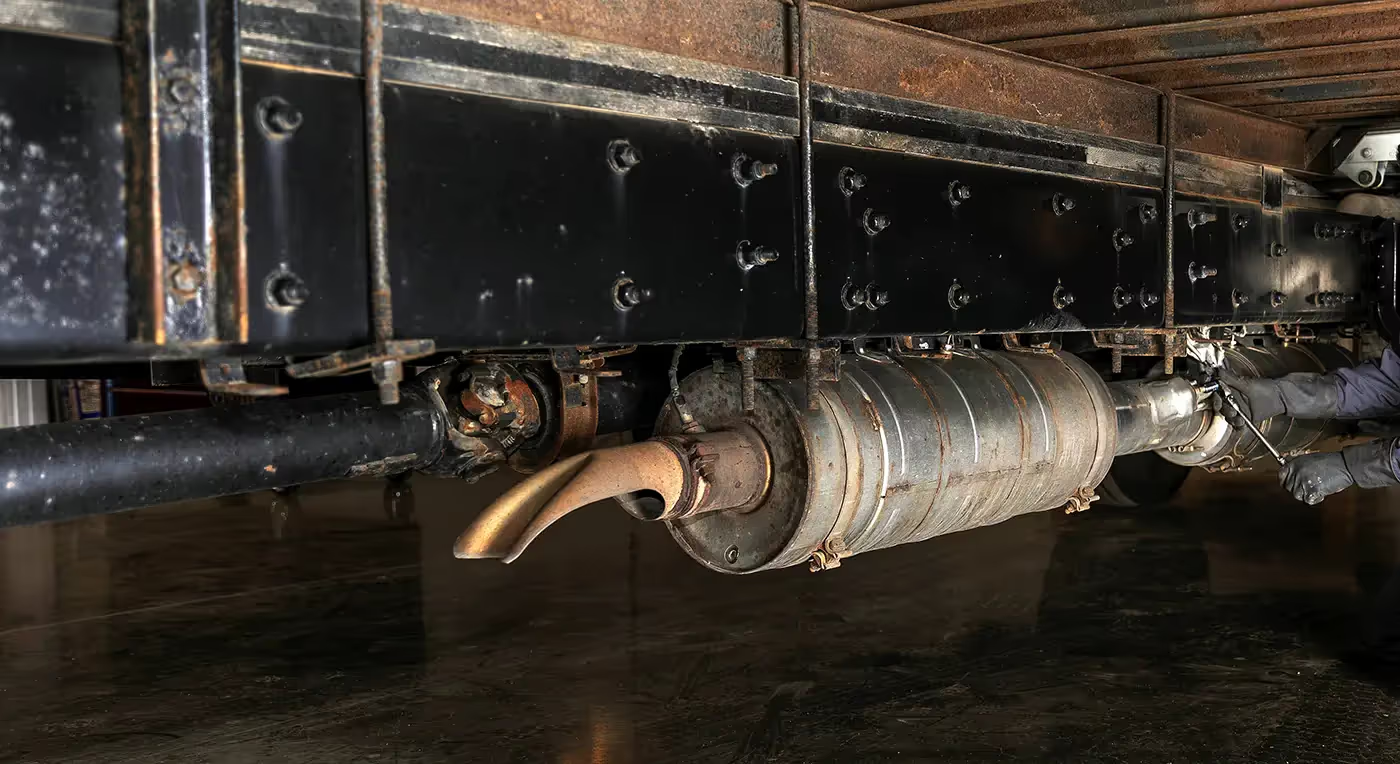
Signs your DPF needs cleaning versus replacement depend on what is restricting the filter, whether the substrate remains intact, and whether another engine problem has damaged the unit. Warning lights and reduced performance can identify an aftertreatment problem, but they cannot confirm the required repair by themselves. Fleetgo Heavy Duty diagnoses commercial truck DPF problems in Edmonton to determine whether cleaning can return the filter to service or replacement is necessary.
What Determines Whether a DPF Can Be Cleaned or Must Be Replaced
A DPF can usually be cleaned when removable soot or ash is causing the restriction and the internal substrate remains serviceable. Replacement becomes necessary when the filter is cracked, melted, contaminated beyond recovery, passing soot, or unable to meet the applicable reuse criteria after cleaning.
Those criteria vary by engine and DPF design. The decision should be based on model-specific soot and ash estimates, differential-pressure or flow limits, regeneration history, physical inspection, contamination, and post-cleaning results. There is no universal pressure reading or soot-load percentage that applies to every commercial truck.
Soot Load vs Ash Accumulation
Soot and ash require different service decisions. Regeneration uses exhaust heat to oxidize soot, provided the calculated load remains within the manufacturer’s safe range. The engine control module and manufacturer procedures determine whether passive, active, or stationary regeneration remains permitted.
A heavily soot-loaded filter should not automatically be forced through another regeneration. If the calculated load exceeds the permitted threshold, the DPF may need to be removed for cleaning or replaced. Attempting regeneration outside the approved range can create temperatures high enough to damage the substrate.
Ash is the non-combustible residue that remains after soot has been burned. It accumulates over time and must be removed through off-truck cleaning. An ash-loaded filter can remain serviceable if the substrate is intact and cleaning restores acceptable airflow.
Cleaning addresses material inside the filter, not the condition that created excessive loading. Injector faults, turbocharger problems, airflow restrictions, oil consumption, sensor errors, and low-temperature operation can cause the DPF to load again unless the underlying problem is corrected.
Physical Damage and Structural Failure
Cleaning cannot repair a damaged filter core. Cracked cells, melted sections, separated substrate, deformed channels, or damaged end plugs prevent the DPF from filtering exhaust correctly.
Soot found on the outlet side can indicate that exhaust is passing through a crack or failed end plug. A filter may also fail its reuse requirements without obvious exterior damage, so visual inspection alone is not enough.
Engine oil or coolant contamination requires additional assessment. The leak must be identified and repaired before the DPF is returned to service. If the contamination cannot be removed through an approved process, or if it has damaged the substrate or catalyst coating, replacement is required.
Signs Your DPF Likely Needs Cleaning
A cleanable DPF often produces signs of increasing restriction before structural damage occurs. These symptoms point toward cleaning when the filter remains intact, the fault data confirms soot or ash loading, and no stop-operation condition is present.
Frequent Regeneration Cycles
Regeneration cycles occurring more frequently than they did under the truck’s normal duty cycle can indicate increasing DPF restriction. Current regeneration history should be compared with the truck’s previous operating pattern because there is no single interval that is normal for every engine or application.
Extended idling, short operating cycles, cold-weather idling, stop-and-go driving, and consistently low exhaust temperatures can prevent complete regeneration. These conditions are particularly relevant to trucks that spend long periods idling during Edmonton winters.
Frequent regeneration can also result from excessive soot production rather than a full DPF. Injector, turbocharger, airflow, oil-consumption, sensor, or dosing problems need to be ruled out before cleaning is selected. Fleetgo’s commercial truck EGR and DPF services cover cleaning, sensor replacement, software updates, and system replacement when required.
Reduced Fuel Efficiency Without Severe Power Loss
A restricted DPF can increase exhaust backpressure and cause more frequent active regeneration. The engine consumes additional fuel during active regeneration, so fuel efficiency may decline before the truck experiences severe power loss.
This symptom supports cleaning when the change corresponds with increased regeneration frequency or confirmed filter restriction. Fuel consumption alone cannot establish DPF condition because engine load, route changes, boost leaks, injector problems, and seasonal idling can produce similar results.
The absence of severe power loss does not guarantee that the filter is safe to keep operating. Fault severity and manufacturer instructions remain more important than how the truck feels from the driver’s seat.
Early Warning Codes Without Derate
Restriction and soot-load codes appearing before derate can identify a serviceable DPF that needs regeneration or cleaning. Addressing the condition at this stage can prevent the filter from reaching a load at which regeneration is restricted.
Not every DPF-related code indicates a dirty filter. Efficiency codes, exhaust-temperature faults, pressure-sensor faults, damaged sensor lines, dosing problems, and software errors require different repairs. The absence of derate does not change the meaning or severity of the stored fault.
The truck should be operated according to the manufacturer’s instructions for the specific warning. A no-derate condition does not override a stop-engine message or a fault procedure that restricts continued operation.
Signs Your DPF Likely Needs Replacement
Replacement becomes more likely when the filter cannot maintain acceptable exhaust flow, no longer contains soot, or has suffered irreversible internal damage. The decision should be supported by physical evidence, manufacturer criteria, or failed post-cleaning results rather than symptom severity alone.
Persistent Derate or Limp Mode
A persistent derate means the engine control system has identified a condition serious enough to limit torque, speed, or vehicle operation. Severe DPF restriction can cause this response when regeneration attempts have failed or differential pressure remains outside the permitted range.
Derate does not automatically prove that the DPF requires replacement. Sensor faults, dosing problems, DEF or SCR faults, and other aftertreatment conditions can produce similar power limitations.
Replacement is justified when the DPF is structurally damaged, cannot be cleaned safely, remains excessively restricted after cleaning, or fails the applicable filtration and reuse checks. If the filter returns to specification after cleaning and the original fault is repaired, derate alone is not a reason to replace it.
Cracks, Melting, or Internal Damage
Cracks allow exhaust to bypass the filter walls, while melting and deformation obstruct airflow through the internal channels. Cleaning cannot restore the structure or filtration performance of a damaged substrate.
Soot staining on the outlet side, separated substrate, loose internal material, or channels that remain blocked after cleaning can confirm permanent damage. Overheating and contamination may also damage a catalyst-coated DPF even when the exterior housing appears intact.
A damaged filter should not be reinstalled simply because some airflow has been recovered. Structural integrity and filtration performance must both remain within the applicable reuse requirements.
Repeated Failures After Cleaning
A successful DPF cleaning should produce acceptable post-cleaning airflow or differential pressure, no evidence of structural damage, and results within the manufacturer’s reuse criteria. Removing material without verifying the result does not establish that the filter is ready to return to service.
If restriction remains after cleaning, hardened deposits, blocked channels, or internal damage may prevent further recovery. Replacement is more appropriate than paying for the same cleaning process again.
When a verified clean filter loads again shortly after installation, the engine or aftertreatment system requires further diagnosis. Installing another DPF without correcting the cause can produce the same failure.
Proper cleaning does not automatically reduce filter performance, but a DPF does not have an unlimited service life. Thermal ageing, catalyst deterioration, repeated contamination, handling damage, and previous overheating can eventually make replacement necessary even when the filter has been cleaned successfully in the past.
Cost and Downtime Differences Between Cleaning and Replacement
Cleaning is generally the lower-cost option because the existing filter is restored and reused. Replacement can cost several times more once the new or remanufactured DPF, installation hardware, labour, and any required system setup are included. The exact difference depends on the truck, filter part number, availability, and original cause of failure.
- When cleaning applies: The substrate remains intact, and removable soot or ash is causing the restriction.
- When replacement applies: The filter is cracked, melted, contaminated, passing soot, or still excessively restricted after cleaning.
- Cleaning costs: Expenses can include removal, cleaning, drying, testing, and reinstallation.
- Replacement costs: Expenses can include the filter, clamps, gaskets, labour, programming, and related repairs where required.
- Cleaning downtime: Turnaround depends on cleaning availability and the time needed to dry, test, and reinstall the filter.
- Replacement downtime: Turnaround depends on identifying the correct DPF, obtaining the part, and completing installation.
Cleaning is not always the faster option. An in-stock replacement may return a truck to service sooner than cleaning the existing DPF. Conversely, cleaning may avoid a longer delay when the correct replacement filter is unavailable.
The underlying fault is a separate cost in either scenario. Injector, turbocharger, sensor, dosing, oil-consumption, or coolant-leak repairs must be included when comparing the complete repair.
Fleetgo can provide a truck-specific comparison once the DPF part number, diagnostic findings, cleaning eligibility, required hardware, and replacement availability are known.
What Happens If You Delay DPF Service Too Long
Continuing to operate with a restricted or failing DPF can increase exhaust backpressure, regeneration frequency, fuel consumption, and the likelihood of derate. Once the soot load reaches a critical level, the engine control module may prevent further regeneration because the required temperature could damage the filter.
Elevated backpressure can reduce turbocharger performance and increase exhaust temperature. Depending on the aftertreatment design and original fault, prolonged operation can also damage temperature sensors, the diesel oxidation catalyst, SCR components, or the DPF substrate.
A problem that initially requires diagnosis, regeneration, or cleaning can progress to a forced shutdown, towing requirement, filter replacement, or related engine and aftertreatment repairs. Clearing a fault code without correcting the cause does not prevent that progression.
Driving should be limited when the truck has a flashing DPF warning, stop-engine warning, severe power loss, abnormal exhaust temperatures, or manufacturer instructions to stop operating. The required response should follow the truck’s operating manual and the severity of the active fault.
Getting Accurate DPF Diagnostics and Service in Edmonton
Accurate DPF diagnostics must separate filter loading from sensor, engine, and aftertreatment faults. Fleetgo provides commercial truck diagnostics in Edmonton to identify the cause before cleaning or replacement is authorized.
The assessment should include active and stored fault codes, regeneration history, calculated soot and ash loading, differential-pressure readings at the specified operating conditions, and exhaust-temperature data. Pressure-sensor lines, temperature sensors, exhaust connections, dosing components, and relevant engine conditions also need to be checked.
When the DPF is removed, its inlet and outlet faces should be inspected for contamination, soot passing, melting, cracks, and substrate movement. A cleaned filter should not be approved for reuse until post-cleaning testing confirms that restriction has been reduced to an acceptable level and no permanent damage remains.
Fleetgo Heavy Duty provides DPF cleaning, sensor replacement, software updates, and complete system replacement when necessary for heavy-duty trucks in Edmonton. The recommended repair depends on the diagnostic evidence, manufacturer requirements, filter condition, and expected downtime.
More Articles


Alternator vs Starter Failures in Commercial Trucks
Contact FleetGo
Get in touch with Fleetgo today to request a quote or to schedule in-shop or mobile services in Edmonton & the surrounding area! Our mobile service extends to a 250km radius around Edmonton for emergency roadside assistance & mobile truck & fleet repairs, including Sherwood Park, Spruce Grove, Fort Saskatchewan, St. Albert, Stony Plain, along Highway 16, & more!